
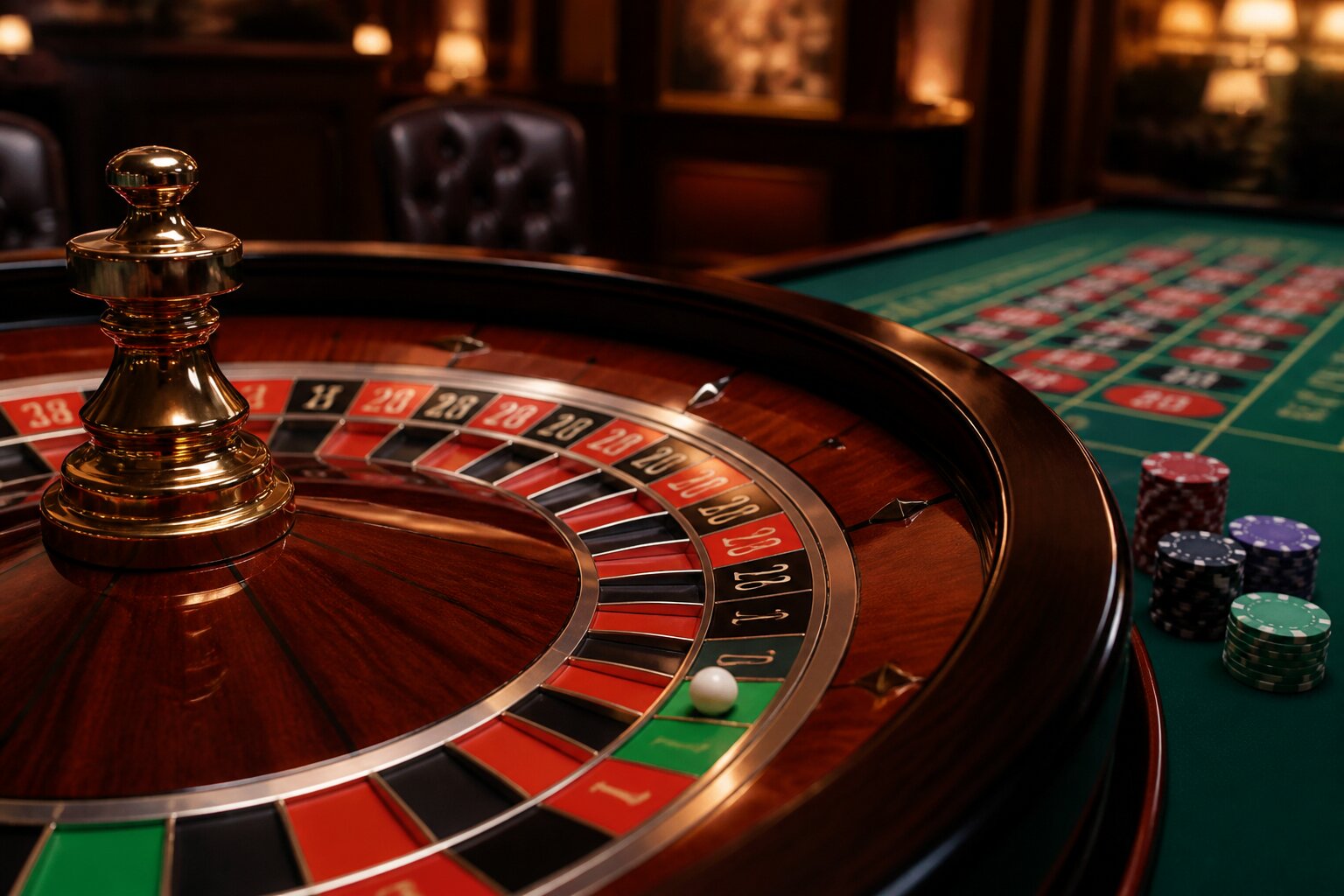
Ever sat at a roulette table and wondered if all those zeros were stacking the odds further against you? Traditional roulette wheels have been a fixture in British casinos for centuries—European and French versions use a single zero, while the American table introduced a double zero. Now there’s a newer variant: triple zero, often shown as “000” roulette.
It looks flashy and is beginning to appear in online lobbies and live casino areas, but adding an extra zero changes more than the wheel’s appearance. Understanding what that third green pocket does to the odds and payouts helps you decide whether the new version is worth trying.
Read on to see how triple zero roulette works, how it compares to older formats, and what the numbers mean for a player’s chances.
What Is Triple Zero Roulette?
Triple zero roulette is a variation of the classic game that adds a third green pocket labelled 000 alongside the usual 0 and 00. That brings the total number of pockets to 39: the 36 red and black numbers plus three green zeros.
The extra pocket appears on the wheel and on the betting layout, where a specific area is provided for the 000. Apart from that, the familiar bet types remain: straight-up numbers, splits, streets, corners, dozens, columns and even-money bets such as red/black or odd/even. The defining change is simply the addition of that third zero, which subtly shifts the maths of every wager.
This adjustment doesn’t alter bet names or payouts, but it does affect the probability of winning any given bet. In the next section you’ll see exactly how those probabilities differ from single- and double-zero wheels.
Key Differences Between Triple Zero and Other Roulette Variants
The most obvious difference is the third zero pocket, which increases the wheel from 37 pockets (European) or 38 (American) to 39. Each extra zero raises the casino’s edge because the number of losing pockets for most bets increases while payouts remain the same.
How Does 000 Roulette Compare to Single and Double Zero Versions?
Single-zero (European) roulette has 37 pockets: numbers 1–36 and a single 0. Double-zero (American) adds 00 for a total of 38 pockets. Triple zero brings the count to 39 with 0, 00 and 000.
Each version therefore carries a different house edge:
Variant — Number of Pockets — Zeros Present — Typical House Edge (approximate)
- European (0) — 37 — 0 — 2.70%
- American (0,00) — 38 — 0, 00 — 5.26%
- Triple Zero — 39 — 0, 00, 000 — 7.69%
A larger house edge means the expected long‑term return to players is lower. With the third zero introduced, the chance of a winning spin for any particular bet falls, even though payouts stay at the traditional levels. This makes the comparison between variants a simple calculation of pockets versus payout structure.
Is the Game Layout Different?
The wheel and table have been adapted to include the 000 pocket, so visually there is an extra green space on the wheel and a corresponding box on the betting grid. Otherwise the layout and bet types are the same as in other versions.
Because the number of winning pockets for many wagers is unchanged while the total pockets increase, even-money bets and number bets become marginally less likely to succeed. That difference is purely numerical, but it alters how long a bankroll is likely to last compared with playing single-zero roulette.
Understanding the house edge will make the numerical impact clearer when we examine the maths behind typical bets.
Understanding the House Edge in Triple Zero Roulette
The house edge is the casino’s built-in advantage, expressed as the percentage of each stake the house expects to retain over many plays. For triple zero roulette that edge is about 7.69%, markedly higher than single-zero (2.70%) and double-zero (5.26%).
Consider a straight-up bet on a single number. With 39 pockets the chance of winning is 1 in 39, but the payout remains 35 to 1. For a £1 stake a win returns £36 (your stake plus £35), so the theoretical average return per spin is (1/39) × £36 ≈ £0.92 on a £1 bet. That works out as the house keeping around 8p for every pound wagered in the long run.
This calculation applies to all bet types: payouts are standard, while probabilities shift because of the extra pocket. Knowing this helps set realistic expectations about odds and bankroll longevity. With that in mind, the next section explains why casinos introduced this variant in the first place.
Why Has Triple Zero Roulette Been Introduced?
New variants refresh a casino’s offering and give players more choice. Adding a third zero creates a distinctive product that stands apart from the classic wheels and can attract attention on live tables or in themed game lists.
From an operator perspective, the extra zero also increases margin, which is a straightforward commercial reason for its roll-out. For players, the variant presents an alternative experience: the same bet names and payouts but different odds. Some will enjoy the novelty or the visual difference; others will prefer the better long‑term returns of single-zero roulette.
Next, we’ll lay out the concrete payouts and the altered odds for everyday bets so you can see the numerical effect of that third zero.
Payouts and Odds in 000 Roulette
Payouts in triple zero roulette match those in European and American versions; it is the chance of hitting them that changes because the wheel contains more pockets. Below are common bet types with their payouts and the corresponding odds in the 39-pocket wheel.
- Straight Up — 35 to 1 — 1 in 39 (≈ 2.56%)
- Split — 17 to 1 — 2 in 39 (≈ 5.13%)
- Street — 11 to 1 — 3 in 39 (≈ 7.69%)
- Corner — 8 to 1 — 4 in 39 (≈ 10.26%)
- Six Line — 5 to 1 — 6 in 39 (≈ 15.38%)
- Dozen/Column — 2 to 1 — 12 in 39 (≈ 30.77%)
- Red/Black, Odd/Even, High/Low — 1 to 1 — 18 in 39 (≈ 46.15%)
Compared with European roulette (37 pockets) or American (38 pockets), each probability shown above is slightly lower because the denominator has increased. The reward for a winning bet, however, remains the same; that mismatch is what raises the house edge. If you want to weigh the value of playing different versions, these figures are the hard evidence to use when comparing expected returns.
With the maths clear, the final section helps you decide whether the extra excitement of a third zero is right for your play style.
Should You Play Triple Zero Roulette?
Whether to play triple zero roulette depends on what you want from the game. If minimising the house edge and getting the best statistical return is the priority, classic single-zero roulette provides clearer value. If the novelty of a different wheel and betting area appeals, triple zero is an alternative but one that comes with a higher built-in advantage to the house.
Players who choose triple zero typically do so for variety rather than improved odds. It can form part of an entertainment budget where the priority is the experience rather than maximising expected returns. Whichever option you pick, keep wagers within a predetermined limit and use the site’s available account controls to manage spend. If concerns arise, professional advice and support services can offer guidance and assistance.
Deciding between variants is effectively a choice between slightly different probabilities and the experience each wheel offers; with the information above, you can make an informed pick and play in a way that suits your priorities.
Play Online Casino Games at Pay By Mobile Slots
Ever thought about discovering something new in online entertainment? We invite you to enjoy casino games in a friendly and secure environment at Pay By Mobile Slots.
Getting started is really straightforward: create your account, make a deposit and choose what you’d like to play. We look forward to welcoming you and hope you enjoy your time with us.
**The information provided in this blog is intended for educational purposes and should not be construed as betting advice or a guarantee of success. Always gamble responsibly.