
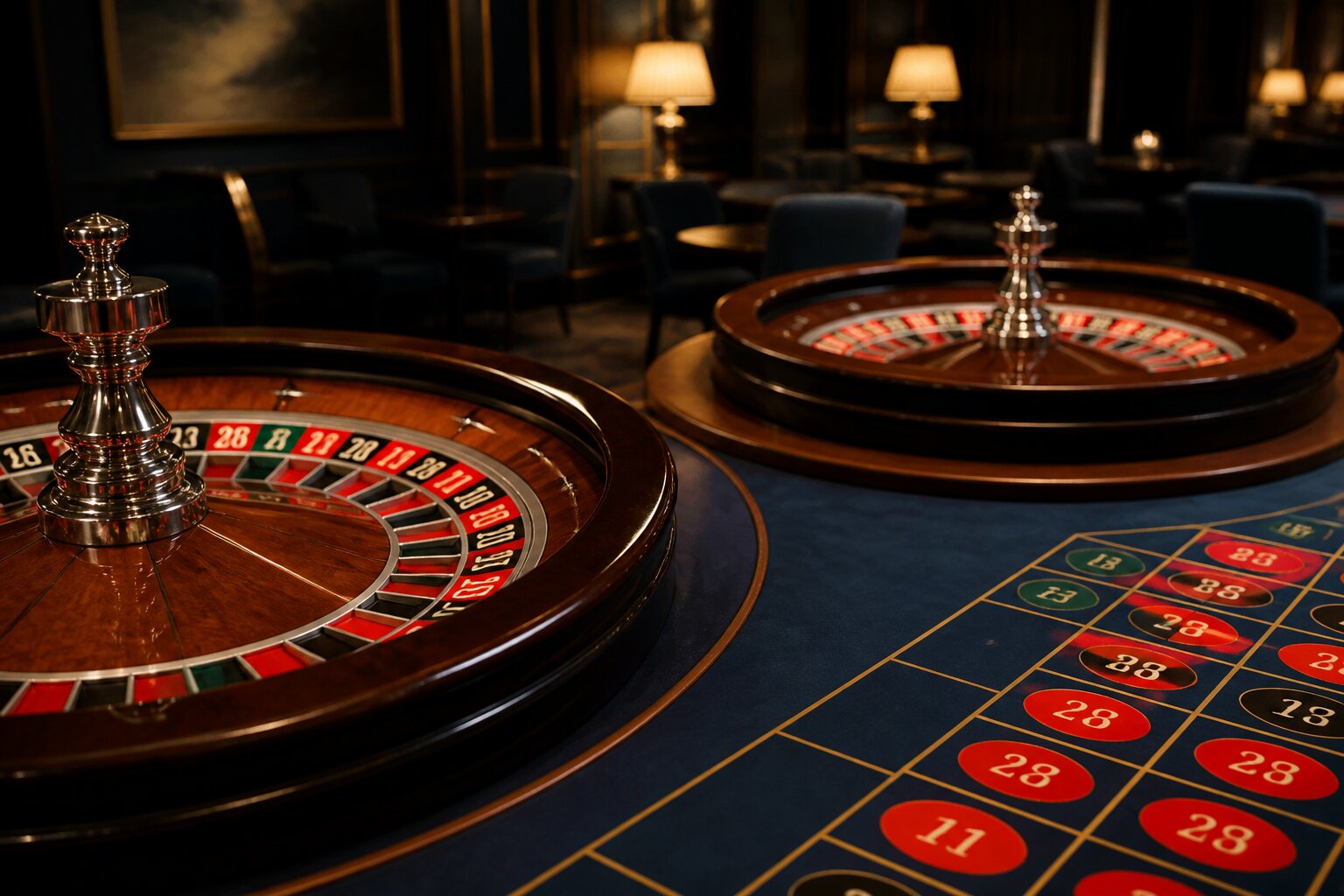
If you’ve ever noticed one green pocket on a roulette wheel while another has two, that small visual difference points to a meaningful change in how the game works. Which wheel you choose affects your chances on every spin and how long your stake might last.
This article explains the practical differences between single zero and double zero roulette, shows how those differences affect odds and payouts, and helps you judge which option gives better value. Read on to see how a single extra pocket can shift the numbers in play.
What Is the Difference Between Single Zero and Double Zero Roulette?
Single zero roulette has one green pocket marked 0; double zero roulette has two green pockets, marked 0 and 00. That one additional pocket is the only mechanical change, but it alters the total number of possible outcomes: 37 pockets on a single zero wheel, 38 on a double zero wheel.
The table layout reflects the wheel. A single zero betting mat shows one green square for 0; a double zero mat includes two green squares, one for each zero. That affects where chips are placed for bets involving the zeros and slightly changes the visual pattern of the numbers, but the basic bet types — straight-up, split, outside bets such as red/black or dozens — remain the same.
Because the wheel and layout determine how many outcomes each bet covers, the extra pocket subtly shifts the risk and reward on every wager. Next, we’ll look at those numbers in more detail and show exactly how the odds change when a second zero is present.
Odds Explained: Single Zero vs Double Zero Tables
Odds depend on how many possible outcomes exist for a given bet. With one more pocket on the wheel, every bet has a marginally lower chance to win on a double zero table. Below is a concise comparison for commonly placed bets.
Bet Type — Single Zero Odds (European) — Double Zero Odds (American)
Single Number — 1 in 37 (2.70%) — 1 in 38 (2.63%)
Red or Black — 18 in 37 (48.65%) — 18 in 38 (47.37%)
Odd or Even — 18 in 37 (48.65%) — 18 in 38 (47.37%)
Dozens or Columns — 12 in 37 (32.43%) — 12 in 38 (31.58%)
Those percentage differences are modest on a single spin but become meaningful across many bets. The single zero format offers the higher probability for each of these outcomes simply because there is one fewer losing pocket. With that clearer picture of the odds, it’s useful to ask how payout rules interact with these chances.
Why Do Payouts Differ at Each Roulette Table?
Payout ratios themselves do not change between single and double zero tables; a straight-up win still pays 35 to 1, a split pays 17 to 1, and so on. The key point is that identical payouts apply to a different number of possible outcomes depending on the wheel.
Because the payout structure does not increase to reflect the extra outcome on a double zero wheel, the effective value of each payout is lower when two zeros exist. For example, the 35-to-1 payout is spread across 37 possibilities on a single zero table and 38 on a double zero table, so the chance of that payout occurring is slightly worse in the latter case.
That gap between identical payouts and diverging odds is what gives the single zero format better expected value for players. Understanding this mismatch between payout and probability helps explain the house advantage figures discussed next.
Single Zero vs Double Zero: Which Offers More Value for UK Players?
When assessing value, two measures matter: the house edge and how commonly each version appears where you play. Both affect the likely outcome over many spins and the ease with which a player can find favourable conditions or familiar variants. Considering both points together gives a clearer picture of practical value rather than a purely theoretical one.
Table Edge and House Advantage
House edge is the long-run percentage of stakes a casino expects to keep. With one zero, the house edge is 2.70% because one of 37 pockets produces the house’s advantage. With two zeros, the edge rises to 5.26% because two of 38 pockets favour the house. In plain terms, that means the single zero layout returns more to players over time than the double zero layout, all else being equal.
That difference is meaningful over many spins; a lower house edge can stretch a bankroll and reduce the speed at which losses accumulate. Variance and bet sizing still determine short-term outcomes, but the underlying maths favours single zero for longer sessions or frequent play.
Player Experience and Game Availability
In the UK market, single zero roulette tends to be the more common format in casinos and online platforms. That prevalence means players often find more game variants, demo versions and community guidance centred on single zero rules, which can make learning and practice simpler. Dealers, tutorials and strategy discussions are more likely to assume single zero, which can reduce confusion for newer players.
Double zero wheels are less frequent locally but still appear in some venues that offer American-style games. These tables can attract players looking for a different experience or higher volatility, but they come with the higher built-in advantage. Availability also affects promotions and limits, so players may see more offers linked to single zero games.
It is worth keeping entertainment and personal limits in mind while playing; viewing roulette as a paid form of amusement and setting sensible boundaries helps players keep control. Decide on affordable stakes, set time and spend limits before you start, and use tools such as deposit limits or session reminders if offered by the operator. With the value differences clear, the next section considers what this means for someone just starting out.
Is Single Zero or Double Zero Roulette Better for Beginners?
For newcomers, the two versions feel the same in practical terms: the betting options, the rhythm of a spin, and how outcomes are announced do not change. What does differ is the maths behind those spins. Single zero tables lower the built-in disadvantage slightly, which makes them the preferable choice if the objective is to get more play from a given stake.
Beginners may also benefit from the greater availability of single zero tables when seeking practice options or watching demonstration games online. Familiarity with the layout, paired with an understanding of how house edge affects returns, helps new players make more informed choices about session length and stake sizes without turning the experience into a technical exercise.
Whichever table a newcomer chooses, the important points are to know how the extra pocket changes the odds and to pick the format that aligns with personal priorities — whether that’s marginally better value per bet or simply the availability of a particular game variant.
This brings us to a final practical takeaway: the choice between single zero and double zero is a simple one in terms of maths, and selecting the table that offers the lower house edge will generally provide better value over time.
Play Casino Games Online at Pay By Mobile Slots
At Pay By Mobile Slots, you're welcome to relax and enjoy the experience of playing with us at your own pace. We’re here to provide an easy-going environment where you can have a flutter whenever it suits you.
**The information provided in this blog is intended for educational purposes and should not be construed as betting advice or a guarantee of success. Always gamble responsibly.