
Ever found yourself at a casino table, wondering whether “21” and “blackjack” are just two names for the same game or if there’s something more to it? You’re not alone. Many players sit down confident they know the answer, only to be tripped up by a twist in the rules or dealers using both terms interchangeably.
On the face of it, both games share the same aim: get as close to 21 as possible without going bust. But when you meet specific house rules, payouts and local habits, small differences become important. Read on to clear up the confusion and learn why those differences matter at the table.
If you’ve ever hesitated over a hand because you weren’t sure what the dealer expects, you’re already in the thick of the myths surrounding blackjack and 21.
What Is the Core Difference Between Blackjack & 21?
The main difference is one of terminology and standardisation. Both games centre on reaching 21, but “blackjack” describes the standardised casino game with fixed rules and set payouts, while “21” is a broader label that can mean any game with the same target number, including informal home or pub variants.
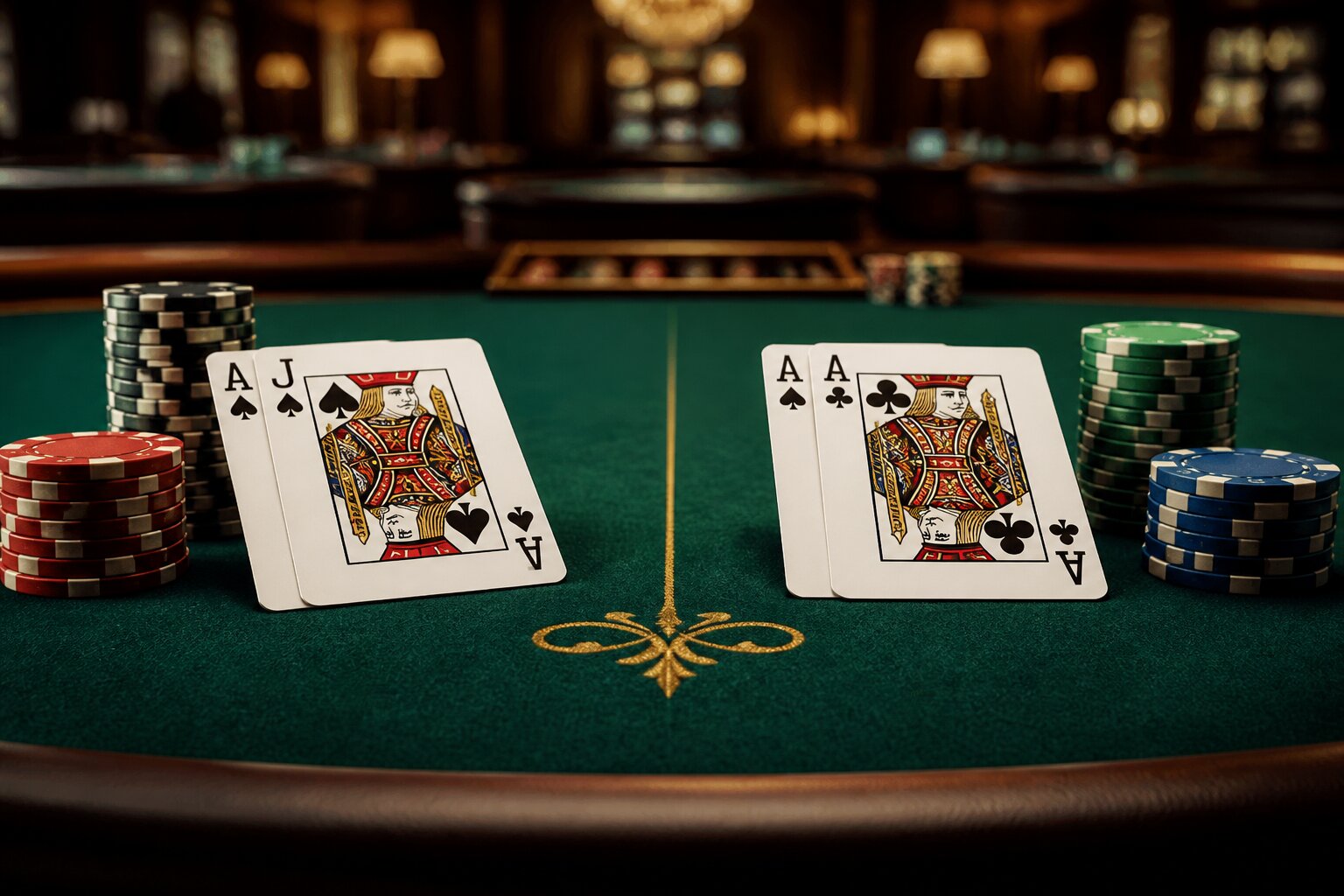
In casino blackjack, a two-card hand made of an ace plus any 10-value card is called a blackjack and receives a higher payout—typically 3 to 2. A 21 made with three or more cards is treated as a regular win and normally pays even money. By contrast, informal versions of 21 might not distinguish between these outcomes, or they may adopt local splits, doubles and dealer behaviour.
Other technical differences that commonly appear are:
- number of decks in play (casinos often use six or eight decks; home games might use one),
- when the dealer must hit or stand on a soft 17 (a hand containing an ace counted as 11),
- and which doubling or splitting options are permitted.
These rule details influence strategy and outcomes at the table. To see how the game evolved into the regulated form most players encounter today, it helps to look at the history next.
Where Did Blackjack & 21 Originate?
Both games trace back to early European card games that shared the same central idea: beat the dealer by getting closer to 21 without going bust. Over centuries, those informal local games were adapted, renamed and standardised into the casino blackjack known today.
Are There Historical Links Between the Two Games?
The French game vingt-et-un (twenty-one) from the early 1700s is one clear ancestor, and similar versions existed in Spain and Italy. As these games spread across Europe and later to Britain and North America, rules shifted with each locality. The English name “21” was commonplace for a long time.
The specific term “blackjack” came from a promotional payout in American gambling halls for a hand containing the ace of spades plus a black jack. Even after that bonus disappeared, the name stuck and became the common label for the standardised casino game.
These historical threads explain why both names survive in conversation, yet one has become the formal title used in regulated venues.
How Have the Rules Changed Over Time?
Early versions were flexible: players agreed rules at the start of a session, and variants could include unusual treatments of aces or altered payouts. As commercial casinos grew, standardisation followed to ensure consistent play and clear odds. That process fixed key elements such as deck counts, card values, payout structures, dealer procedures and payout structures.
In short, the modern casino game is the refined descendant of many local variants, while “21” remains a useful umbrella term for the older, less formal incarnations. With that background in mind, the next section clears up some persistent misunderstandings players bring to the table.
Popular Misconceptions About Blackjack & 21
Many commonly held beliefs about these games come from mixing casual play with formal casino practice. Below are frequent misconceptions and accurate explanations to set the record straight.
Any Hand Totalling 21 Is a Blackjack
Only a two-card hand consisting of an ace plus a 10-value card qualifies as a true blackjack for the enhanced payout. A 21 made with three or more cards is typically a standard win.
Blackjack and 21 Always Follow the Same Rules
Rules vary. Casino blackjack is standardised, but home or pub versions called “21” may use different deck numbers, payout rules or options for splitting and doubling.
The Terms ‘Blackjack’ and ‘21’ Are Interchangeable in All Contexts
People often use the names interchangeably in casual conversation, yet in regulated play the term “blackjack” is the one used on tables and in official game listings.
All Casinos Follow the Same Number of Decks
Not necessarily. While many casinos use six- or eight-deck shoes, single- or double-deck games exist, and that choice affects the game’s characteristics.
Special Payouts for ‘Blackjack’ Apply to All 21s
Enhanced payouts are reserved for the specific two-card blackjack hand in regulated games; other 21s usually pay even money.
Clearing these points helps avoid missteps at the table and prepares you for how rules are applied in different settings. Next, we’ll look at how those rule differences show up in payouts and deck use.
Do Blackjack and 21 Use the Same Rules?
They share the central goal, but rule differences depend on setting. Casino blackjack follows strict procedures for dealing, payouts and dealer conduct, while informal 21 games may adapt rules to suit the players.
The most visible differences concern how the dealer behaves, which doubling or splitting moves players can make, and how many decks are shuffled together. These elements shape strategy and the expectation of play in each environment.
How Do the Payouts Compare?
In regulated casino play, a two-card blackjack generally pays 3 to 2—so a £10 bet would return £25 in total (£15 profit). A 21 made with more than two cards typically pays 1 to 1, returning only the stake plus winnings equal to it.
Informal home games might not keep this distinction and could treat every 21 the same or use house-decided payouts. That difference in reward structure is one of the clearest practical distinctions between the two contexts.
Are the Decks and Card Values Always Identical?
Card values remain standard: aces can count as 1 or 11, face cards count as 10, and numbered cards equal their face value. What varies is the number of decks and any house-specific rules such as permissive splitting or altered double-down options. Regulated venues use consistent deck choices and documented rules so players know what to expect.
Understanding these differences makes it easier to adapt your expectations when moving from a casual game to a casino table. That helps explain why many people treat the names as synonymous, which we examine next.
Why Are the Games Sometimes Considered Interchangeable?
The overlap in core play—competing against a dealer with the same scoring goal—creates the impression that the games are the same. Social gaming, family traditions and pub nights reinforced the term “21” for generations, so when players encounter the formal casino version they naturally equate the two.
Casinos, however, present a controlled environment with clear signage and standard rules, so the name “blackjack” is used for clarity. The lived experience of playing—deciding to hit or stand, managing a hand containing an ace—feels very similar in both settings, which perpetuates the interchangeable use of the names in everyday speech.
Next, we consider whether you’ll see both names on the gaming floor.
Can You Find Both Games at UK Casinos?
On the casino floor you will see blackjack listed; separate tables labelled “21” are not used in regulated venues. Online platforms may list themed variants under different titles, but what appears as “21” in those cases is usually a branded version of blackjack that adheres to the same regulated rules and payouts.
Casual home or pub games that call themselves “21” continue to exist socially, but they are distinct from the formally run blackjack tables in casinos. When choosing where to play, check the posted rules and payout information so you know which version you are at and what to expect.
Regulated blackjack games make the rules explicit and consistent for all players, and that clarity is the best guide for anyone stepping up to a table.
Final statement: while “21” and “blackjack” share a common ancestor and similar gameplay, the difference matters where rules, payouts and regulation are concerned — in casinos you’re playing blackjack, complete with defined mechanics and standardised outcomes.
Play Casino Games Online at Pay By Mobile Slots
We welcome you to experience all the fun that our site has to offer. With us, casino gaming is all about enjoyment and having a good time.
Getting set up is straightforward: just create your account, make a deposit and you are ready to explore our games. We look forward to seeing you soon!
**The information provided in this blog is intended for educational purposes and should not be construed as betting advice or a guarantee of success. Always gamble responsibly.