
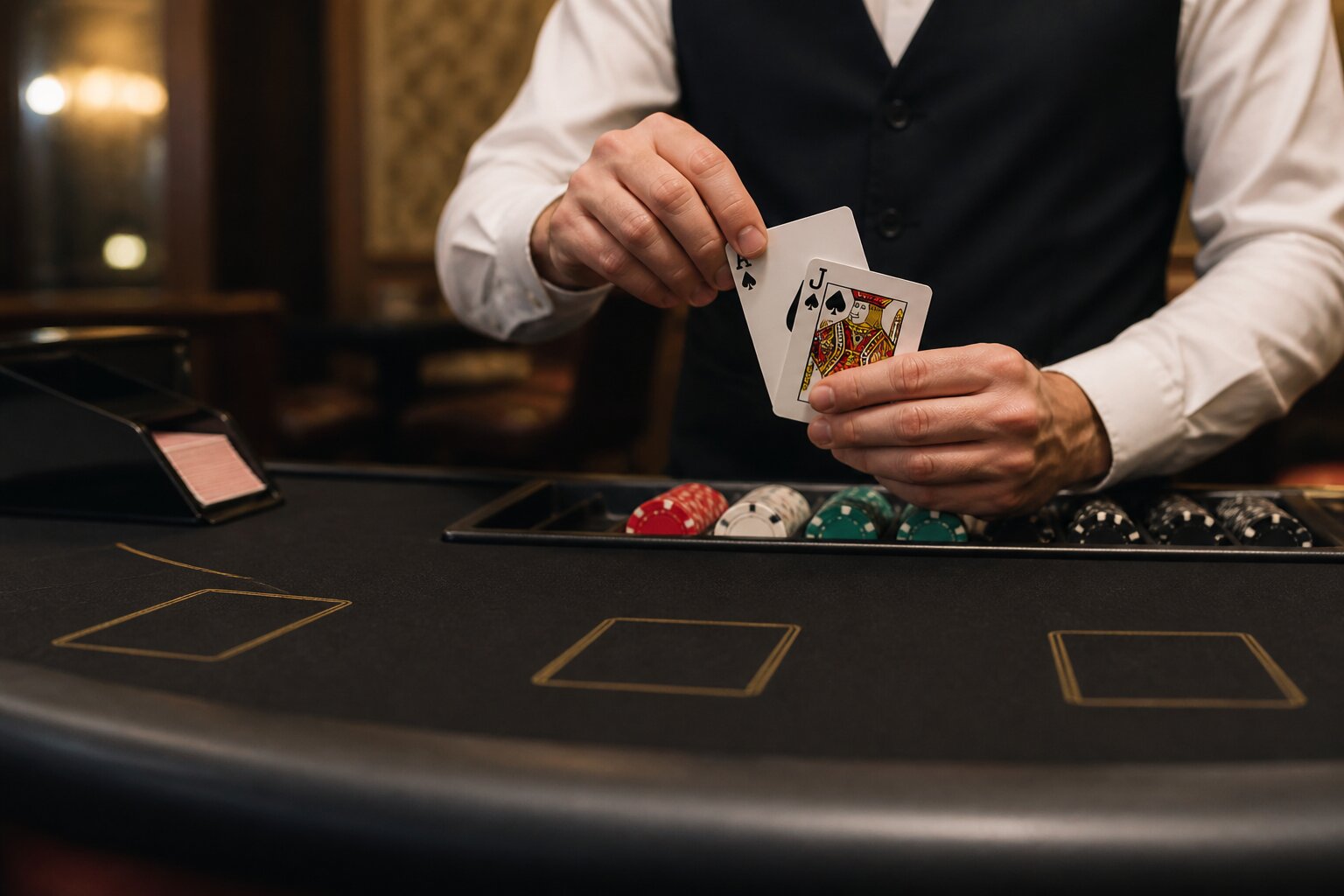
If you’ve ever watched a dealer pause after the initial deal, that small moment can feel bigger than it looks. It’s a quick check, but it decides whether the round carries on or finishes right away.
This article explains what dealers are looking for, how they check, and why that matters to everyone at the table. Read on to get a clear picture of the process and what it means for your own decisions.
What Is a Blackjack in Casino Games?
A blackjack is the strongest two-card hand you can receive at the start of a round. It is made up of an Ace plus any 10-value card — a 10, Jack, Queen, or King — and totals 21 with only those two cards.
If a player reaches 21 using three or more cards, that is not called a blackjack; it is simply 21. Blackjack typically resolves immediately: the hand wins outright unless the dealer also has a blackjack, in which case the result is a push.
Only adults aged 18 or over can take part at licensed venues. Understanding what qualifies as blackjack helps you follow the table as hands are checked and settled.
How Do Dealers Check for Blackjack?
After the initial two-card deal, the dealer will check for blackjack when their face-up card is an Ace or a 10-value card. The hidden card, commonly called the hole card, is the one they inspect.
Many tables have a built-in device or mirror that allows the dealer to verify the hole card without exposing it to the whole table. If the dealer’s two cards form a blackjack, they show it and the round is concluded for most players. If not, play continues and players take their turns.
This quick check speeds up play and prevents unnecessary actions if the outcome is already decided. It’s a routine part of the game designed to keep rounds moving and outcomes clear.
What Is the Dealer’s ‘Hole Card’?
The hole card is the dealer’s face-down card dealt at the start of the round. It sits with the visible card to form the dealer’s starting hand, but stays hidden until revealing is appropriate.
Keeping the hole card concealed until the right moment prevents players from gaining unfair information about the dealer’s hand. It’s a standard rule that maintains the balance between dealer and players and helps ensure each round follows the agreed procedures.
When the rules call for a check — for example, when the dealer’s up-card is an Ace or a 10-value — the hole card is inspected using the table’s checking method. Otherwise it remains hidden while players make their decisions.
How Is the Process Different in Various Blackjack Games?
Different blackjack variants handle the deal and the check in slightly different ways. In some European-style games the dealer takes only one card face up and waits to draw or check until after players have acted. In many American-style games the dealer receives two cards immediately, one face up and one face down, and checks the hole card at once if the up-card warrants it.
Live online tables typically mirror whichever house rules apply at the casino table they are emulating, and may use automatic shuffles or visible cameras to show procedure. The key point across versions is consistency: each game uses a transparent method so players know when a check will happen and how hands will be settled.
Knowing which variant you’re playing makes it easier to predict the rhythm of the round and what to expect when a dealer pauses to check their cards.
Why Is Dealer Checking Important for Players?
The dealer’s check protects the integrity of the round by confirming whether play should continue. When a dealer has blackjack, hands are settled immediately and any further decisions by players would be moot.
This practice prevents confusion and reduces the chance of disputes, because outcomes are announced quickly and according to established rules. It also keeps the pace steady, so players are not left waiting unnecessarily while the dealer confirms the result.
Understanding this check helps players follow the flow of the game and make choices without uncertainty. Remember that gambling should be undertaken responsibly as a form of entertainment; set personal limits and seek help if gambling stops being enjoyable.
Common Myths About Dealers Knowing They Have Blackjack
A few myths suggest dealers can anticipate blackjack or influence outcomes, but these are unfounded. Dealers work to strict procedures set by the casino and by regulation, and they follow established routines at all times.
They operate within prescribed routines and use official checks only when the rules permit. These routines are designed to be consistent and observable so that both staff and players can see correct play.
They do not do any of the following:
- Peek at the hole card early to gain an advantage.
- Announce results or alter play before following the correct procedure.
The checking methods and table devices are in place to prevent any improper advantage and to make results verifiable. Cameras, supervisory staff and physical controls such as the cut card all add layers of protection against mistakes or misconduct.
If you want reassurance, casino staff can explain the rules in plain terms and show where procedures are documented. That openness and the ability to review procedures is part of what helps keep the game fair for everyone and consistent with regulatory standards.
How Can Players Tell If the Dealer Has Blackjack?
When the dealer checks for blackjack, what you can and cannot see is straightforward.
What Players Can See
You will always see the dealer’s face-up card. If it is an Ace or a 10-value, a pause indicates the dealer is checking the hole card using the table’s method. Any confirmed blackjack will be revealed immediately.
What Remains Hidden
The hole card remains concealed until it is officially checked and revealed. There are no reliable signs or motions that let players know the dealer’s hidden card beforehand.
The Outcome
Once the check is complete, the dealer shows the result and the round continues or concludes accordingly. Focus on your own decisions and the visible cards; the rules are structured so that every player has the same information at the same time.
Playing with a clear idea of how checks work keeps the game predictable and fair, and leaves you free to enjoy each round with confidence.
Final thought: knowing how and why dealers check for blackjack removes the mystery from that brief pause and helps you understand how hands are resolved at the table.
**The information provided in this blog is intended for educational purposes and should not be construed as betting advice or a guarantee of success. Always gamble responsibly.