
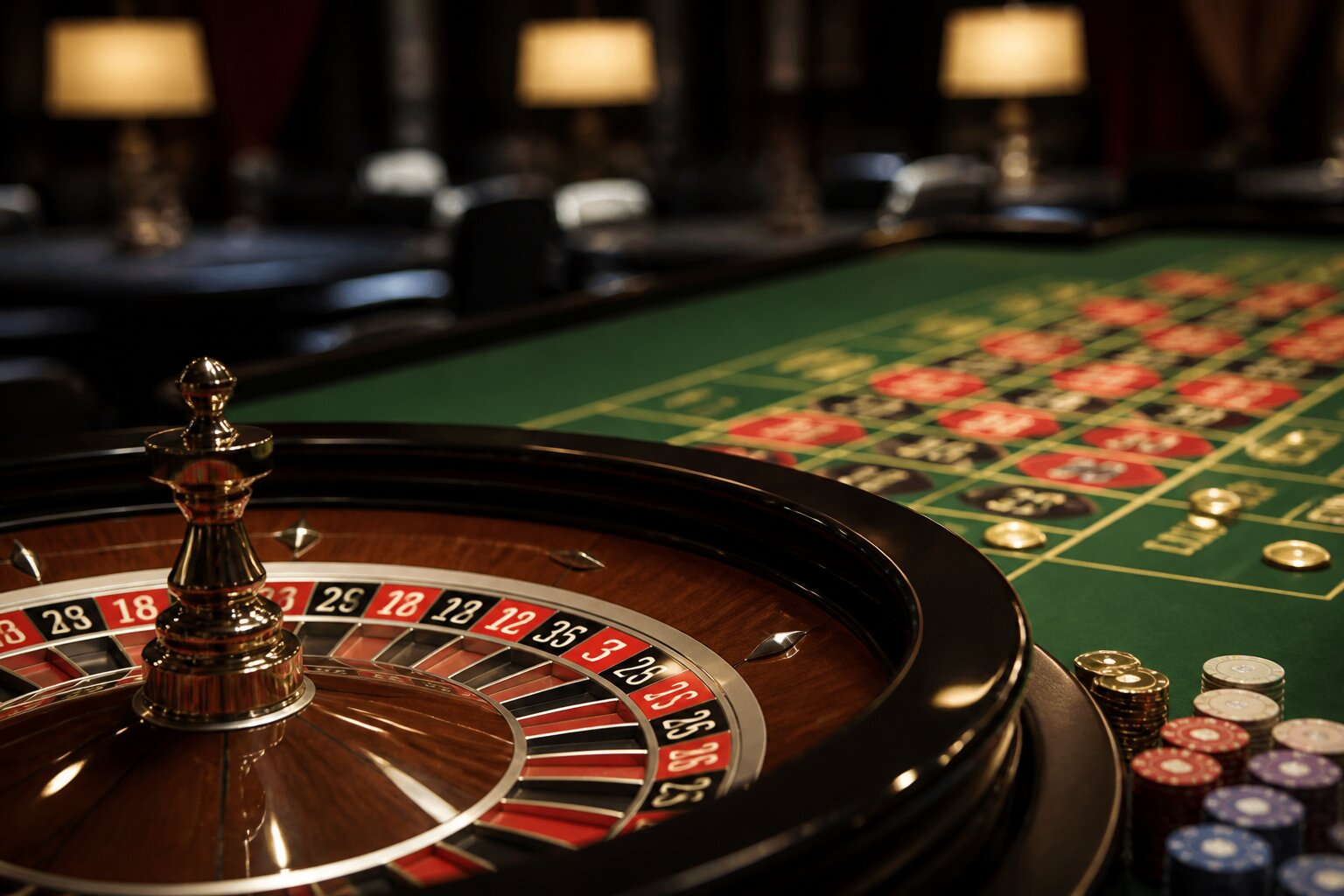
There’s something thrilling about the spin of a roulette wheel—a moment where attention fixes on a single number as the little ball bounces around the rim. Whether you’re a seasoned casino-goer or just trying your first few spins, most people have a number they prefer—perhaps a birthday, a football shirt number or a figure that feels familiar.
But is any number genuinely better to play than another? Do some numbers appear more often, or does every spin treat each number the same? Understanding how the wheel and the game’s systems work will make your next visit more informative and enjoyable.
Do Some Roulette Numbers Come Up More Often?
Mathematically, every number on a standard roulette wheel has an equal chance of winning. In European roulette there are 37 pockets (numbers 1–36 and a single zero), so each number has a 1 in 37 chance—about 2.7%—on every spin. The additional double zero found on American wheels is uncommon in the UK and is not part of the local standard.
Data from well-maintained, regulated wheels supports this equality of outcomes. Licensed casinos undergo routine inspections and maintenance to prevent mechanical bias; any fault would be corrected promptly to protect players and the venue’s integrity. Short runs of repeated outcomes—what players sometimes call hot streaks—are normal in a random process and tend to even out over large numbers of spins.
So, on a properly run wheel, no number has an inherent advantage. That keeps the game straightforward: each spin offers the same statistical chance, and the appeal lies in the unpredictability of the moment. If you want to explore which numbers people talk about most, the next section looks at those commonly mentioned in anecdotes and stories.
Most Commonly Landed Numbers Explained
A handful of numbers have become famous simply because they appear frequently in player stories and casino anecdotes. Among those often mentioned are:
17 black
7 red
23 red
8 black
3 red
These numbers are brought up most because memorable wins get repeated and shared, not because the wheel favours them. For instance, 17 often stands out partly because of its central placement on many roulette layouts and because high-profile wins on that number are easy to recall. Red 7 appears in stories partly due to its cultural visibility in other games and media.
Anecdotes from regular players or streams can create the impression that some numbers actually land more often, but modern tables and online systems are designed to produce unbiased outcomes. Any apparent concentration of results in one area is a short-term fluctuation rather than evidence of a pattern. The following section explains why those short-term clusters happen and how randomness is assured both in physical and digital play.
Are Roulette Numbers Truly Random?
Fairness and randomness are central to roulette. Regulations require that outcomes are left to chance, whether a spin occurs on a physical wheel in a casino or through an online system. Operators must follow strict rules and oversight to ensure games are run fairly and transparently for players.
How Are Roulette Spins Generated?
In land-based casinos, randomness comes from the physical interaction between the wheel, the ball and the dealer’s release. Variations in speed, angle and where the ball is released all contribute to making each spin unique. To guard against bias, casinos carry out regular maintenance and checks on wheels and equipment, and independent bodies may inspect devices to ensure compliance with standards.
For digital play, Random Number Generators (RNGs) produce results that mimic real spins. These computerised systems use complex algorithms to generate sequences of numbers that are unpredictable in practice. RNGs and their implementations undergo independent, rigorous testing and certification to verify they are fair, statistically sound and resistant to manipulation.
Can Patterns Actually Occur?
Short streaks or clusters—such as a colour appearing several times in a row—are a natural part of random sequences. They can feel meaningful or suggest a pattern, but statistically they are expected events in an impartial process. Human perception often seeks order where none exists, which is why such runs can seem more significant than they are.
Over a very large number of spins, those short-term clusters balance out so that no sustained pattern gives an advantage. The long-term probabilities remain constant, and regulation and testing aim to ensure that neither physical nor digital games deviate from these expected statistical behaviours.
Understanding the mechanics of randomness and regulation helps clarify why roulette outcomes behave the way they do. With the basics covered, it is useful to compare how different table layouts affect the odds you face.
Comparing European & American Roulette Tables
European and American roulette share the same core gameplay, but a single extra pocket on the American table changes the long-term maths.
European roulette has 37 pockets (1–36 and a single zero), which translates into a house edge of about 2.7%. American roulette adds a double zero (00), bringing the pocket count to 38 and increasing the house edge to roughly 5.26%. That extra pocket does not change the payout structure—straight-up bets still pay 35 to 1—but it does make winning slightly less likely over time.
The arrangement of numbers on the wheel differs between the two versions, too, but the crucial practical point for players is the house edge. For those seeking the lower statistical disadvantage, the European wheel is generally the better option. Next, the article tackles common beliefs about “hot” and “cold” numbers and why they don’t change the underlying odds.
Myths About Hot and Cold Numbers
Beliefs about numbers being “hot” or “cold” add drama to the game, but they do not alter the underlying probability of outcomes.
What Are Hot Numbers in Roulette?
Players call numbers “hot” when they have appeared several times within a recent sample of spins. Casinos and online platforms sometimes display recent outcomes, which can make certain numbers stand out and draw attention. This visible history can create a sense that some numbers are more likely to come up again, especially when a number crops up repeatedly over a short period.
That sense of momentum can be persuasive, but it is a matter of perception rather than mathematics. The display of past results is useful for transparency and engagement, yet it also encourages players to see patterns where none affect future spins.
Are Cold Numbers Worth Avoiding?
“Cold” numbers are simply ones that have not appeared for a while. The idea that a number is due to appear rests on a misunderstanding of independent random events. Each spin’s outcome is unaffected by previous spins, so there is no mathematical reason to favour or avoid any particular number based on recent history.
These misconceptions persist because humans naturally look for patterns in everyday life and in games. Recognising that hot and cold tags are psychological rather than statistical can help keep expectations realistic and avoid decisions based on false beliefs. With that in mind, the next section explains how the house edge and payouts shape what to expect over the long term.
Understanding House Edge and Payouts
The house edge is the built-in advantage the casino holds in roulette, and it sets realistic expectations about returns over time. In European roulette, the 2.7% edge means the casino retains, on average, £2.70 for every £100 wagered across many spins. That figure reflects long-term averages rather than outcomes of individual sessions.
Payouts in roulette are fixed to reflect the probabilities. A straight-up bet on a single number pays 35 to 1, so a successful £1 wager returns £35 plus the original stake. Split bets covering two numbers pay 17 to 1, and street bets covering a row of three numbers pay 11 to 1. Even-money wagers—such as red/black, odd/even or high/low—pay 1 to 1 but remain slightly disadvantaged by the presence of the zero.
Knowing these odds helps frame reasonable expectations: short sessions can produce any outcome, but the house edge dictates the likely result over a large number of spins. If you’d like to try particular bets, our site lists available table options and current rules so you can make an informed choice.
Final note: roulette is designed as an impartial game of chance; understanding the maths and avoiding common myths will make the experience clearer and more enjoyable.
Enjoy Casino Games at Pay By Mobile Slots
We welcome you to explore the world of casino games with us, where there is always a fantastic selection for every taste. Whether you enjoy a wide range of choices or like to discover something new, you will find plenty on offer at our site.
Getting started is simple: just create your account, make a deposit and take your pick from the collection. We look forward to having you with us for some great entertainment.
**The information provided in this blog is intended for educational purposes and should not be construed as betting advice or a guarantee of success. Always gamble responsibly.