
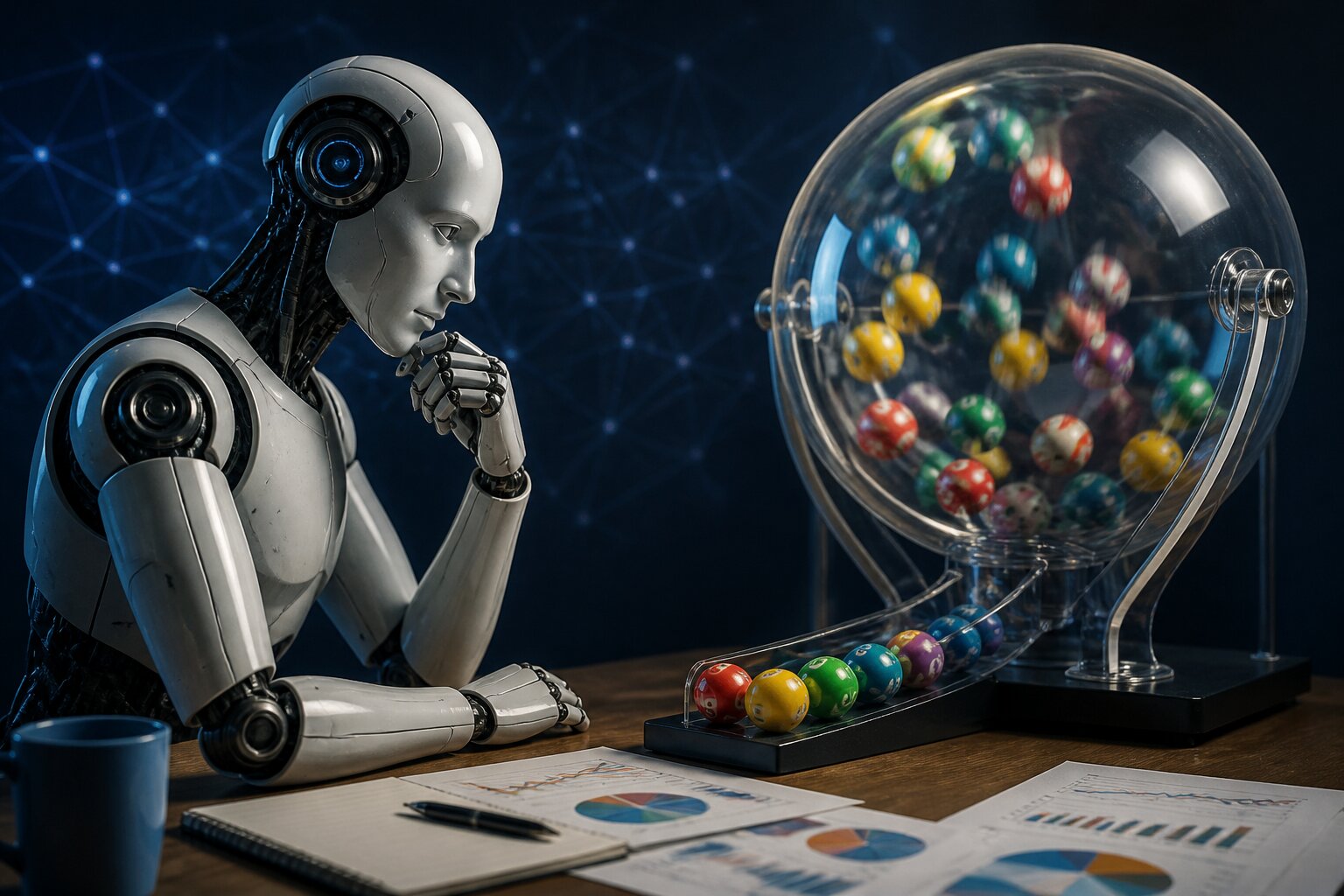
Imagine never having to worry about bills again, all because a handful of numbers came up. It is a thought that crosses many minds when people buy a lottery ticket on a Friday evening. With artificial intelligence advancing fast, some now ask whether computers could use their power to pick those life-changing numbers.
Stories about AI beating humans at games or assisting in complex tasks make the question feel plausible. But predicting the next numbers in a properly run lottery raises particular technical and legal challenges that are worth examining closely.
How Do Lottery Numbers Get Drawn?
Lottery numbers in the UK are drawn using two main methods: mechanical ball machines and electronic random number generators (RNGs). For televised draws, machines filled with numbered balls are mixed and then drawn one by one, with machines and ball sets selected at random before the draw. Independent adjudicators and oversight are present to keep the process open and verifiable.
Many online instant-win and some automated draws use computer-based RNGs. These systems are routinely audited to make sure outcomes are unpredictable and meet regulatory standards. Both approaches aim to produce true randomness so no one can foresee the next result. Understanding how draws are made helps when considering what AI might or might not do next.
What Can Artificial Intelligence Actually Do with Lottery Data?
Artificial intelligence excels at handling large datasets. Applied to historical lottery results, AI can sort thousands of past draws, chart frequencies, spot number pairs that have appeared together, or measure gaps between appearances of a particular number. For example, an AI model could show how often the number 7 appeared in the Lotto over a decade or identify pairs that have coincided more than others.
These outputs are useful as descriptive statistics: they reveal what happened, not what will happen. Because each draw is independent and governed by randomness, past patterns do not change the probability of future outcomes. AI can highlight trends in the archive of results, but those trends do not alter the underlying mathematics of the next draw. The next section explains why that distinction is decisive.
Why AI Cannot Accurately Predict Random Lottery Results
Lotteries are designed so each draw is independent. The outcome of previous draws has no influence on subsequent ones, which means probability for each combination remains constant. In the UK Lotto, for example, the odds of matching all six main numbers are about 1 in 45 million for every ticket, every draw. No amount of historical analysis changes that baseline probability.
AI is effective where there are causal relationships or recurring structures to learn from, such as consumer behaviour or weather patterns. In draw-based lottery games, those causal cues are absent by design, so predictions based on historical draws cannot increase the chance of success. Claims that AI can reliably forecast winning numbers misunderstand the statistical nature of the games.
Common Myths About AI and Lottery Number Prediction
There are many attractive claims circulating online: screenshots of “winning” tickets attributed to algorithms, services selling purportedly clever combinations, or adverts suggesting secret methods to beat the system. These narratives are appealing but rest on misunderstanding or misleading presentation.
One common myth is that AI can “crack the code” by finding hidden structures in past draws. In practice, any apparent structure found in a sufficiently large dataset of random events is a coincidence, not a reliable signal for the future. Another frequent claim is that a paid tool can guarantee wins; such promises are unfounded and should be treated with scepticism. The next subsection addresses whether any kind of guarantee could exist.
Is There Such Thing as a “Guaranteed Win” Using AI?
No. There are no systems or software that can guarantee a win on any UK lottery draw, regardless of the methods advertised. If guaranteed wins existed, prize pools and rollovers would behave very differently and the system would cease to function as intended. Bold guarantees are a clear warning sign when evaluating a service.
Can AI Improve Your Chances of Winning?
AI cannot improve the mathematical odds of winning. How numbers are chosen—by hand, at random, or via an algorithm—does not alter the probability attached to each ticket. Playing should be undertaken with a clear expectation that outcomes are governed by chance, and spending should remain within personal limits. If playing becomes problematic, support services are available to help maintain healthy control.
Risks and Ethical Issues Surrounding AI Lottery Tools
AI-driven tools marketed for lottery players carry several risks. Some services charge fees for number recommendations or subscriptions while offering no genuine increase in odds. Users tempted to purchase these products may spend more over time, driven by the belief that an algorithm offers an edge when it does not. This pattern can lead to financial harm for some individuals.
There are also ethical concerns around marketing such tools. Promoting the idea of a technical shortcut exploits hopeful players and can mislead vulnerable people. Developers or vendors that intentionally overstate benefits risk breaching consumer protection rules. For those worried they are overspending, confidential support is available through organisations that specialise in gambling-related help. The next section looks at the legal side of using AI with lotteries.
Are There Any Legal Concerns with Using AI for Lotteries?
Using AI to choose numbers is not illegal in itself, but a number of practices connected to automation are prohibited. Unauthorised software that bulk-purchases tickets, automates entries, or interferes with lottery systems can breach providers’ terms and conditions and may lead to account suspension or legal action. Data harvesting from official sites risks breaching terms of use or copyright protections if done without permission.
Marketing tools with misleading claims about guaranteed wins can also attract regulatory sanctions under consumer law. Age and identity checks are mandatory for participation, and operators must follow safeguards designed to protect players. Those interacting with AI-based services should ensure the supplier is transparent about what the product does and does not achieve.
The Bottom Line: What to Know About AI and Lotto Predictions
Artificial intelligence can analyse past draws and present interesting statistics, but it cannot predict future lottery results or improve the mathematical odds of winning. Every draw in a properly run lottery is random and independent, so no algorithm can reliably forecast the next outcome.
Paid services that claim certainty or substantial advantage should be treated with caution, and anyone using tools of this kind should do so with realistic expectations and personal limits on spending. Play for entertainment, maintain control, and seek advice if gambling causes concern. That clear perspective is the most useful guide when deciding how to engage with lotteries and related technologies.
**The information provided in this blog is intended for educational purposes and should not be construed as betting advice or a guarantee of success. Always gamble responsibly.