
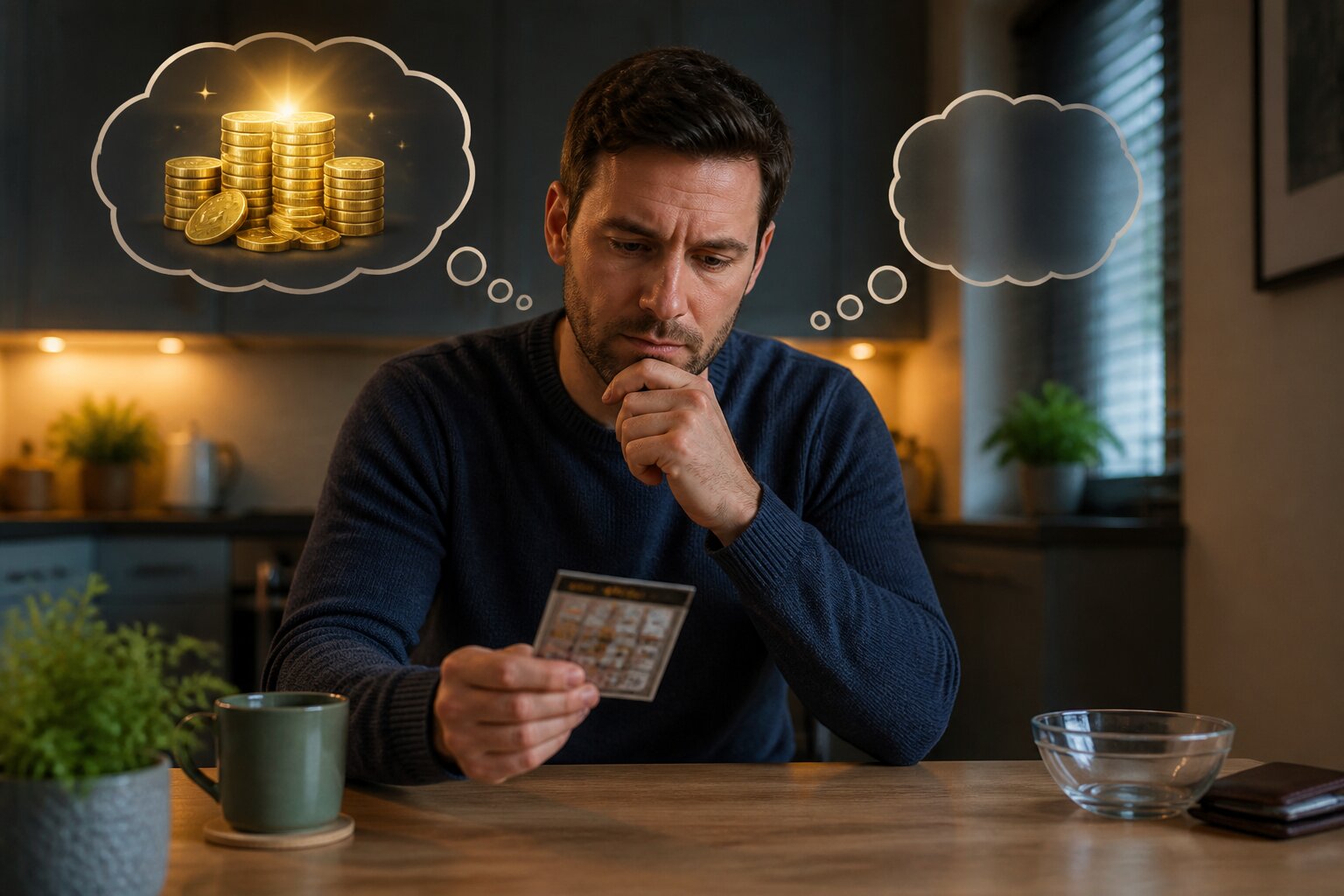
Scratch cards promise quick thrills and sometimes very large prizes. With so many rumours and second-hand stories circulating, it’s easy to get confused about how these games actually work and what is realistic to expect.
This article separates common misconceptions from fact, explains how physical and digital scratch cards operate under UK rules, and outlines what happens when a ticket pays out. Read on to get a clear view of the mechanics and odds so you can decide whether playing fits your priorities.
How Do Scratch Cards Really Work?
Scratch cards are governed by predetermined outcomes and strict controls. For physical tickets, symbols or numbers are printed first and an opaque coating is applied over the play area; the result on each card is fixed before it ever reaches a shop. Digital versions use a Random Number Generator (RNG), a computer programme that determines the outcome the instant you reveal the card on screen. In both cases the result cannot be altered at the point of sale or play.
Regulators require independent testing of both formats to confirm that the published odds match the distribution of prizes and that results are appropriately random. Testing laboratories verify game design, prize allocation and the technical systems that support online play. Operators also publish information about prize breakdowns and odds so that potential players can see how likely various outcomes are before deciding to buy.
Because outcomes are fixed or immediately generated by certified systems, no purchase pattern or timing can change the statistical chances contained in each game. The important practical points are what the published odds say and that games are subject to oversight and verification by third parties.
Understanding how results are created helps when comparing different cards and deciding whether a particular game offers value for what you want to spend.
Common Myths About Scratch Cards Explored
Scratch cards attract many myths. Sorting these out helps avoid repeating assumptions that can lead to unnecessary spending or false hope.
First, the idea that scratch cards are rigged is incorrect for licensed games. Independent testing and regulatory oversight mean the distribution of prizes and odds must match published information. Neither shop staff nor online platform employees can change what is printed on a physical ticket or what the RNG produces at the moment of play.
Second, not all cards offer the same chances. Games vary by price and design; a lower-priced card will usually present different odds and a different prize structure to a higher-priced one. These differences are published in the game information so players can compare options.
Third, expensive cards do not exclusively deliver the big wins. Higher-priced tickets typically include larger top prizes and sometimes slightly better overall odds, but smaller and mid-tier wins can appear on lower-priced games too. Each game’s prize distribution determines how frequently different prize levels occur.
Fourth, patterns, timing or the shop you buy from do not influence outcomes. Each card is independent: physical cards already contain their outcome, and digital plays are produced by an RNG at the moment of reveal, so patterns based on purchase behaviour do not affect results.
These clarifications make it easier to assess the sensible expectations around scratch cards and move on to the specifics of odds and prize structures.
What Are the Odds of Winning on Scratch Cards?
Odds are declared for each game and must be available to the public. A statement such as “1 in 4” means that, on average across the whole print run or distribution, one in every four tickets will win some prize. That figure covers all prize levels combined, which can include many small wins that merely return the ticket cost.
Odds vary by game and price point. Lower-cost cards often present combined odds in the region of one in four or one in five for any prize, while higher-cost cards can improve those overall odds slightly. The chances of hitting the top prize are much longer; a six-figure top prize on an inexpensive ticket may be rare by design, sometimes running into the millions-to-one against a single ticket.
Operators publish full prize tables and odds for each game so players can see the breakdown between small, medium and top prizes. Examining that information makes it clear whether a game leans towards frequent low-value returns or offers the possibility of a larger, but much rarer, payout.
With those figures in mind, the next section explains why common approaches marketed as “systems” do not alter those published probabilities.
Can You Increase Your Chances of Winning?
Outcomes are determined by the game’s design and the mechanics described earlier, so no method reliably increases the statistical probability of winning beyond the advertised odds. Buying more tickets raises total exposure to prizes proportionally to the amount spent, but it does not change the per-ticket probability of success.
Choices such as selecting a particular design, visiting a certain shop, or playing at a particular time do not influence the random or preassigned outcomes. For online games, the RNG generates each result independently; for physical games, the card’s result is already set. Selecting a game with more favourable published odds or a prize structure that suits personal preferences is the only practical way to influence expected value without changing the inherent probabilities.
With that settled, it helps to know what practical steps follow if a ticket does win, whether purchased in person or online.
What Happens When You Win a Scratch Card?
Claim procedures depend on the ticket type and prize size. Small amounts can usually be collected directly from the retailer where the physical card was purchased. Larger sums typically require a claim through the game operator, which involves submitting the winning ticket and identification and waiting for verification.
For online wins, payouts under the operator’s withdrawal threshold are often credited immediately to the player account. Larger withdrawals usually trigger account verification procedures, including identity checks and confirmation of payment details, before funds are released. These checks are part of standard security and anti-fraud measures and help ensure that legitimate winners receive their payments.
Claim timelines vary by prize size and operator but are structured to ensure verification and secure payment. Knowing the likely claim route for a prize level can remove uncertainty and set realistic expectations about how and when funds will be received.
Next, compare how the experience differs between playing in a shop and playing online.
Are Online Scratch Cards Different from In-Store Versions?
Both formats share the same basic purpose and are regulated to ensure fairness, yet the player experience and administrative details differ. In-store cards are tangible: you can inspect the ticket, see printed odds and prize information, and sometimes claim smaller wins at the point of sale. Online cards are interactive digital games; the interface reveals results electronically and account systems manage credits and withdrawals.
Online platforms typically offer additional account controls and verification tools automatically, making processes such as applying deposit limits or setting time-out periods easy to use. Retail purchases do not carry those same immediate digital tools, but physical retailers may provide advice and information at the point of sale. Both channels must meet regulatory requirements for transparency and fairness, so the core protections and published odds apply across the board.
Having clarified format differences, the final important topic is understanding how to manage play so it remains a controlled leisure activity.
Responsible Play: Understanding the Risks
Playing scratch cards should be an informed and controlled choice. The instant nature of the game and easy availability can lead to more spending than intended, so it is sensible to set a firm budget beforehand and treat any expenditure as the cost of entertainment rather than an investment.
Look out for warning signs such as repeatedly exceeding planned spending, feeling compelled to buy more after a loss, or thinking about play at times when it interferes with other responsibilities. Many operators offer practical account controls and self-exclusion options to limit play; bricks-and-mortar retailers can also provide information on support services.
Confidential help is available from UK support services that offer guidance and practical tools for anyone concerned about their gambling. If patterns of play become worrying, contacting a support service can provide tailored advice and access to structured self-exclusion schemes.
When play is kept within predetermined limits and approached with clear expectations, scratch cards can remain a straightforward form of short entertainment.
Enjoy Casino Games at Pay By Mobile Slots
We invite you to explore the world of games on our site, where choice and variety are always at your fingertips. Whatever your preferences, our selection is designed to help you find something you’ll enjoy.
Getting started couldn’t be simpler—just create an account, make a deposit, and you’re ready to play. We look forward to welcoming you and hope you have a great experience with us.
**The information provided in this blog is intended for educational purposes and should not be construed as betting advice or a guarantee of success. Always gamble responsibly.