
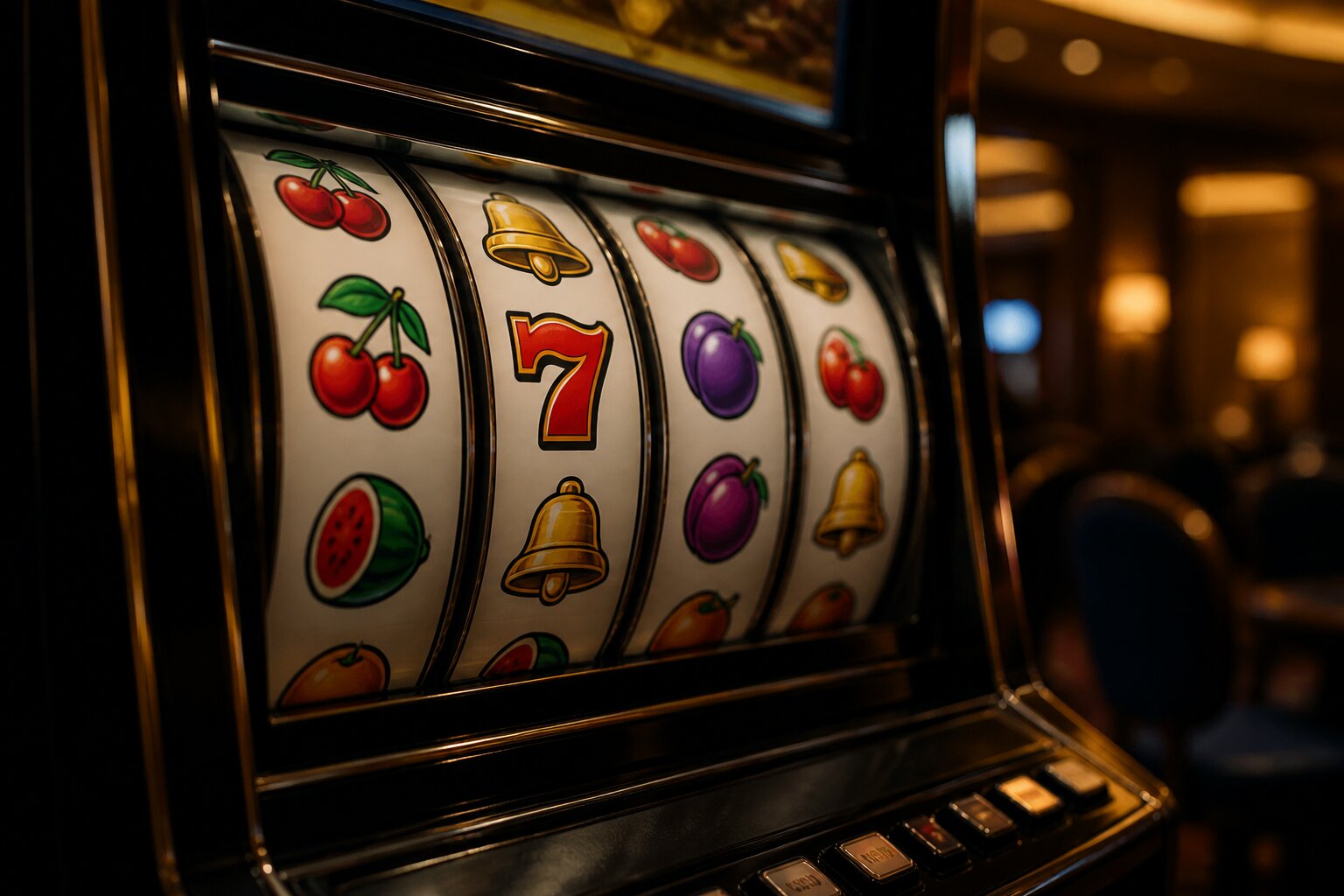
Ever wondered why some slots seem full of endless possibilities while others land the same symbols more often? The answer lies in the structure of slot reels and the choices designers make behind the scenes.
Understanding how reels are built reveals a lot about a game’s features, odds and visual style. It’s not just spinning—there’s a system beneath every result.
Curious about how many symbols can appear on a single reel and what that means for the way games play? Let’s explore the technical and design choices that shape every spin.
What Is a Slot Machine Reel?
A slot machine reel is the column that displays symbols and determines the combinations that appear when the reels stop. In mechanical machines this was a physical drum with symbols printed around it; in modern games it’s a virtual construct controlled by software. Either way, the reel is the visible part of the mechanism that produces outcomes.
Reels are arranged in grids—three-by-three and five-by-three are common—that define which symbol positions count toward wins. The number of reels, the height of each reel (how many visible rows) and the symbol mix together shape the playing experience and the types of winning combinations possible. With that picture in place, we can look at how physical and digital reels actually differ.
How Do Physical and Digital Reels Differ?
The shift from mechanical to digital changed how many symbols a reel can contain and how they’re presented to players. Mechanical reels had a fixed number of stops dictated by physical space, typically around 20–25, so each symbol’s presence on the reel was literal and limited. Digital reels, by contrast, are virtual lists that can emulate many more stops and finer control over symbol frequency.
Video slots allow designers to assign dozens or even hundreds of virtual stops per reel, and to vary the apparent frequency of symbols without altering the on-screen layout. That flexibility supports extra features such as bonus-trigger symbols or variable reel heights. The way reels are built affects how a game feels and what kinds of features it can include, and it also changes how symbol frequency is managed behind the scenes.
Why Do Reels Have Different Numbers of Symbols?
Design choices drive the number of symbols on a reel. A simple, retro-themed game will use fewer symbols and a compact layout for straightforward play, while a feature-rich slot might use many symbols to support scatter payouts, wild behaviour or bonus mechanics. Technical constraints, target audience and the desired volatility all influence those choices.
Regulatory standards require transparent and tested random outcomes, so developers balance creative aims with rules that protect fairness. Advances in software and animation have widened the choices available, but the core aim remains the same: match the reel structure to the game’s mechanics and player expectations.
Standard Slot Reel Layouts
Common layouts give players familiar ways to engage with slots. The five-by-three grid is prevalent because it supports many paylines and layered bonus features while remaining intuitive. Three-by-three designs echo classic fruit machines and keep play compact and easy to follow. Larger setups—such as six-reel designs or formats with variable reel heights—exist to create more complex ways to win and to host novel bonus systems.
There are also dynamic layouts, such as the so-called “megaways” approach, where the number of symbols visible on each reel can change every spin. That creates variable payline counts and a very different feel from fixed-grid games, with more combinations possible on any given spin.
How Are Symbols Arranged on a Reel?
Symbol arrangement is planned through a concept called the symbol strip: a sequence of symbols assigned to a reel, whether physical or virtual. In physical machines the strip is a tangible band; in digital games it’s a virtual list that governs what can appear at each stop. Developers use symbol strips to control how often each icon appears, ensuring the desired balance between low-value and high-value symbols and placing special symbols where they support bonus features.
Blanks—stops that show no paying symbol—can be used to alter hit frequency, and special symbols such as wilds or scatters are positioned to interact with the game’s mechanics. The strip’s layout is a deliberate tool for tuning volatility and theme rather than an arbitrary assortment of icons. Next, we’ll consider whether these choices change the fairness of each spin.
Does the Number of Reel Symbols Affect Slot Outcomes?
The number of symbols on a reel is a design parameter, not a shortcut to better or worse odds. Outcomes are determined by a random number generator (RNG) that selects which stop on a reel will appear in a visible position. That RNG-driven process is independently tested and regulated to ensure games meet standards for fairness and transparency.
Varying symbol counts and placements change how often specific combinations occur and therefore affect volatility and typical payout patterns, but they do not compromise the integrity of the outcome. Games are engineered so players can enjoy different experiences—quick, frequent wins versus rarer, larger payouts—while remaining within regulated frameworks that keep results random and impartial. Responsible play guidance and regulatory oversight support this approach.
Common Myths About Reel Symbols Debunked
Misconceptions about reel behaviour persist, so it helps to clarify a few common ones. One is the idea that symbols can be “due” to appear after a dry spell; RNG-based spins have no memory, so prior results do not alter future probabilities. Another is the notion of “hot” or “cold” reels that change in performance over time; properly regulated games do not adjust outcomes in that way.
It’s also false to assume that simply having more symbols on a reel guarantees more wins or fewer wins. Symbol count is a tool for shaping a game’s profile—its payout frequency and prize distribution—rather than a mechanism that biases results. Understanding these points helps set realistic expectations about what reel design can and cannot do, and prepares the player to appreciate the variation in game types.
All in all, symbol counts, strips and layouts are design levers that create the many styles of slot games available today. They influence the rhythm and variety of play without undermining the random, tested nature of each spin.
**The information provided in this blog is intended for educational purposes and should not be construed as betting advice or a guarantee of success. Always gamble responsibly.