
Ever sat down for a friendly game of poker with your mates or a festive round of rummy at a family get-together, knowing how to shuffle properly can save you from embarrassment and speed the game along.
A good shuffle does more than look neat at the table. It prevents predictable patterns, helps protect your favourite deck from wear, and keeps the action moving without awkward pauses. That satisfying ripple of cards and the gentle snap as they settle — done well, shuffling looks and feels effortless.
With several shuffling methods to choose from, it’s useful to know which work best for different hands and situations. The next section explains why shuffling matters and what it protects against.
Why Is Shuffling Cards Important?
Shuffling is the simplest way to make sure a game is played on equal terms. If a deck isn’t mixed properly, groups of cards can stay together and create patterns that experienced players or dealers might exploit. Thorough mixing preserves the intended unpredictability of the deal and protects the integrity of a game.
In regulated settings, careful shuffling is part of the standard procedure to make sure no one can anticipate the order of cards. At home, the same principle applies: a proper shuffle reduces suspicion, keeps disputes to a minimum, and makes the outcome depend on skill and the deal rather than on any prior arrangement of the deck.
Shuffling also protects the physical deck. Repeating gentle, appropriate techniques avoids marking or bending cards, which could otherwise give clues about card identities. With those considerations in mind, it helps to learn a few reliable shuffling methods suited to different hands and occasions — starting with the basics below.
Essential Card Shuffling Techniques
Learning a handful of shuffles gives you options for different games and different decks. Each technique mixes the cards in its own way and has practical advantages, from minimal card wear to speed or visual neatness. The short guides that follow explain how each shuffle works and what situations they suit best.
How to Perform the Overhand Shuffle
The overhand shuffle is straightforward and ideal for casual play or smaller hands. Hold the deck in your dominant hand, supported lightly between thumb and fingers. With your other hand, use your thumb to peel off small packets from the top into your waiting palm. Vary the packet sizes and repeat the action several times to mix the deck.
Keep movements gentle so the cards don’t bend. The overhand shuffle doesn’t randomise as quickly as some other methods, so allow enough repetitions to avoid clumps. Its simplicity and low stress on the cards make it a good choice for many home games. If you’d like a quicker interleaving effect, the riffle shuffle is the next technique to try.
Mastering the Riffle Shuffle
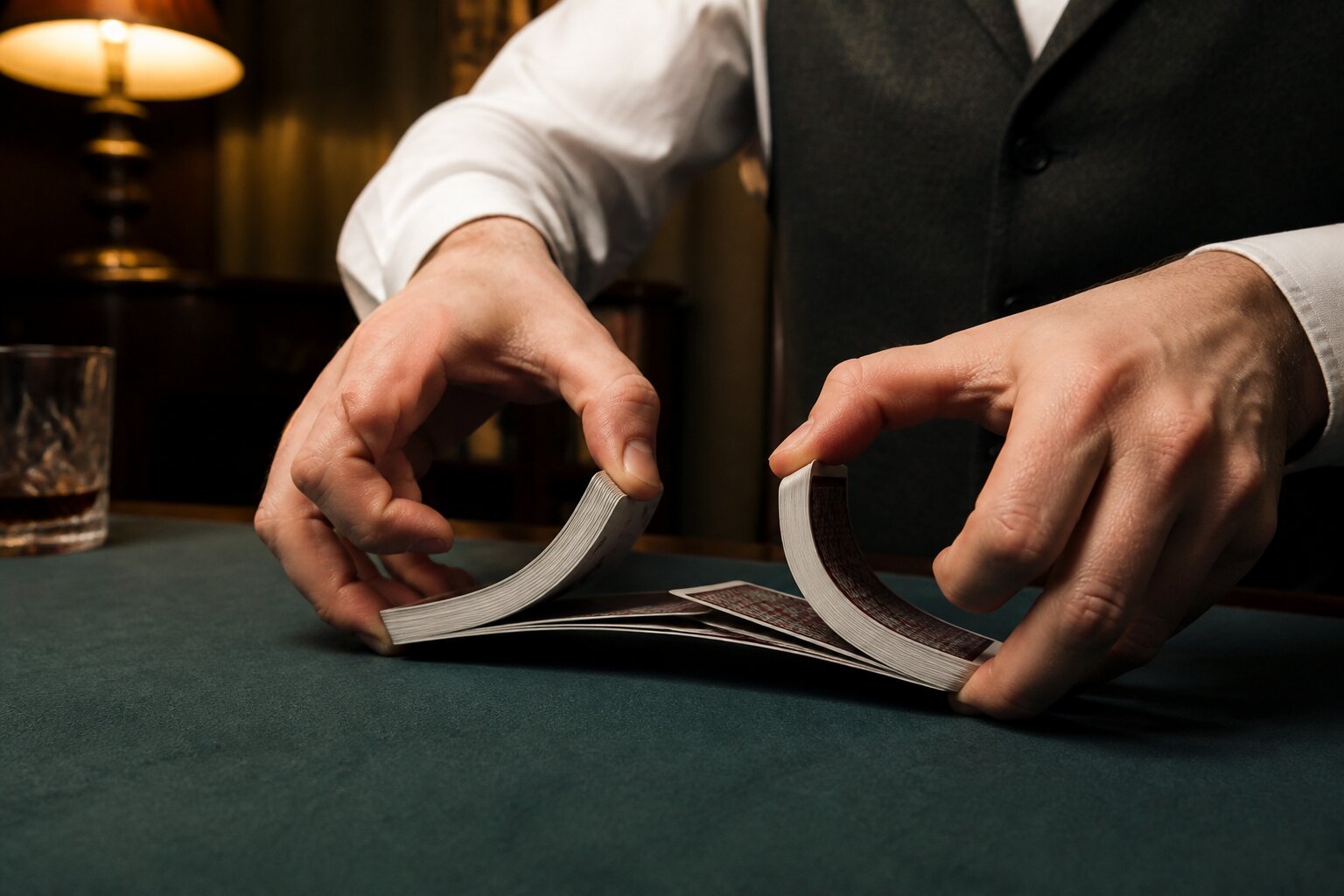
The riffle shuffle is effective at producing a thorough mix and is commonly used where a deeper randomisation is desirable. Split the deck into two roughly equal halves, holding each stack with the thumbs on the inner edge and fingers at the back. Let the edges of the cards release so they interlace, then bring the halves together neatly.
A light grip and controlled thumb release help the cards interweave smoothly without flying apart. Square the deck after the interlace to settle the cards. For a stronger shuffle, repeat several times, taking care not to bend the cards; practise on a soft surface if you’re learning to avoid chips or slips. Once the deck is well mixed, consider a single cut or overhand pass to finish and secure the order.
What Is the Hindu Shuffle?
The Hindu shuffle is a gentle, rhythmic way to mix a pack that’s often favoured for delicate or smaller decks. Hold the deck lengthways in one hand and use the other hand to pull small packets from the top into your palm, repeating until the whole pack has been transferred and stacked. Repeat this pattern a few times to achieve a good mix.
Because the Hindu shuffle is soft on the cards and easy on the wrists, it’s practical for casual sessions or when preserving card condition is a priority. It won’t interleave cards as tightly as a riffle, but when repeated it breaks up clumps effectively without stressing the deck.
Avoiding Common Shuffling Mistakes
Many errors are avoidable with a little attention. Flashing the bottom card during a shuffle reveals information to other players, so keep the bottom covered with a hand or resting on the table until you’ve completed your technique. Bending cards through forceful riffling or snapping can leave permanent creases that mark particular cards; treating the deck gently avoids this.
Another frequent issue is insufficient mixing. A couple of superficial passes often leave runs of cards intact, so repeat your preferred shuffle enough times to disperse those runs. Also watch for unintentional patterns created by always cutting or shuffling in the same way — varying technique helps keep the order unpredictable.
Finally, handle cards with clean, dry hands to reduce dirt and grease, which can make cards stick together and reveal subtle wear. With these points in mind, shuffling becomes both more secure and kinder to your deck. Next, the best shuffles for particular games explain how to match technique to play style.
Which Shuffle Should You Use for Different Games?
Different games and environments have different needs, so certain shuffles suit particular settings better than others. Below are practical pairings to consider when choosing how to mix the deck.
Blackjack: The riffle shuffle is common in table play because it thoroughly interleaves cards, reducing the chance of patterns forming. It’s useful when quick, reliable randomisation is required.
Poker: A mix of riffle and overhand shuffles provides a balance between thorough mixing and gentle handling. Overhand passes can bridge between riffles, especially during longer home games where preserving card edges matters.
Baccarat: Games using multiple packs or a shoe often favour overhand or wash-style shuffles, where cards are spread and gathered. These methods are easier on larger sets and help mix several decks together without excessive wear.
Casual or children’s games: Overhand or Hindu shuffles are best for informal play. They’re simple, put less strain on novelty or inexpensive decks, and are easy for a wide range of players to perform.
Selecting a method that fits the game, the number of cards, and the condition of the deck helps maintain fairness and prolong deck life. Having a couple of dependable techniques at hand means you can adapt as the game or group demands.
Keeping Your Cards in Good Condition
Caring for cards extends their usable life and reduces accidental markings. Store decks flat in their original box or a hard case to prevent warping, and keep them away from direct sunlight, heaters, or damp environments that can cause discolouration or sticking.
Before play, ensure hands are clean and dry to avoid transferring oils or food residue. Avoid eating or drinking over the playing surface to eliminate spills that stain or warp cards. If a pack is used frequently, occasionally rotate which side faces up in storage so wear is distributed more evenly.
When shuffling, use gentle force appropriate to the card quality. Expensive or collector packs need a softer touch than standard play decks. These care habits protect the deck from creases, splits, and marked edges that could influence play, while keeping the cards looking and feeling right at the table. The next section offers ways to make shuffling smoother and faster without compromising care or fairness.
Tips for Smoother and Faster Shuffling
Speed and smoothness arrive with practice and attention to small details. Start slowly to build muscle memory; controlled repetitions at a comfortable pace help the hands learn the motions so they become natural and reliable. Aim for fluidity rather than haste, because accuracy ensures the deck is properly mixed.
A soft surface such as a felt mat makes handling easier and keeps cards from sliding off the table during brisk shuffles. Maintain a relaxed grip to let the cards move freely — tension in the hands usually causes bent corners or dropped cards. Position your body with a comfortable table height and keep elbows relaxed so motion is unrestricted, particularly during longer sessions.
As speed improves, don’t sacrifice thoroughness. It’s better to take an extra moment to complete a proper shuffle than to rush and leave clumps intact. Practising a couple of techniques until they feel natural gives you the flexibility to choose the appropriate shuffle for the game, the deck and the setting. With that skill in place, every game starts with a clean deal and a deck that’s ready to work well at the table.
Enjoy Casino Games at Pay By Mobile Slots
We invite you to become part of our vibrant community, where enjoying casino games is all about entertainment and sharing the excitement with fellow players. There is a place for everyone on our site, and we would love to welcome you.
Getting started is simple: just create an account, make a deposit and you are all set to play. We look forward to seeing you enjoy the experience with us.
**The information provided in this blog is intended for educational purposes and should not be construed as betting advice or a guarantee of success. Always gamble responsibly.