
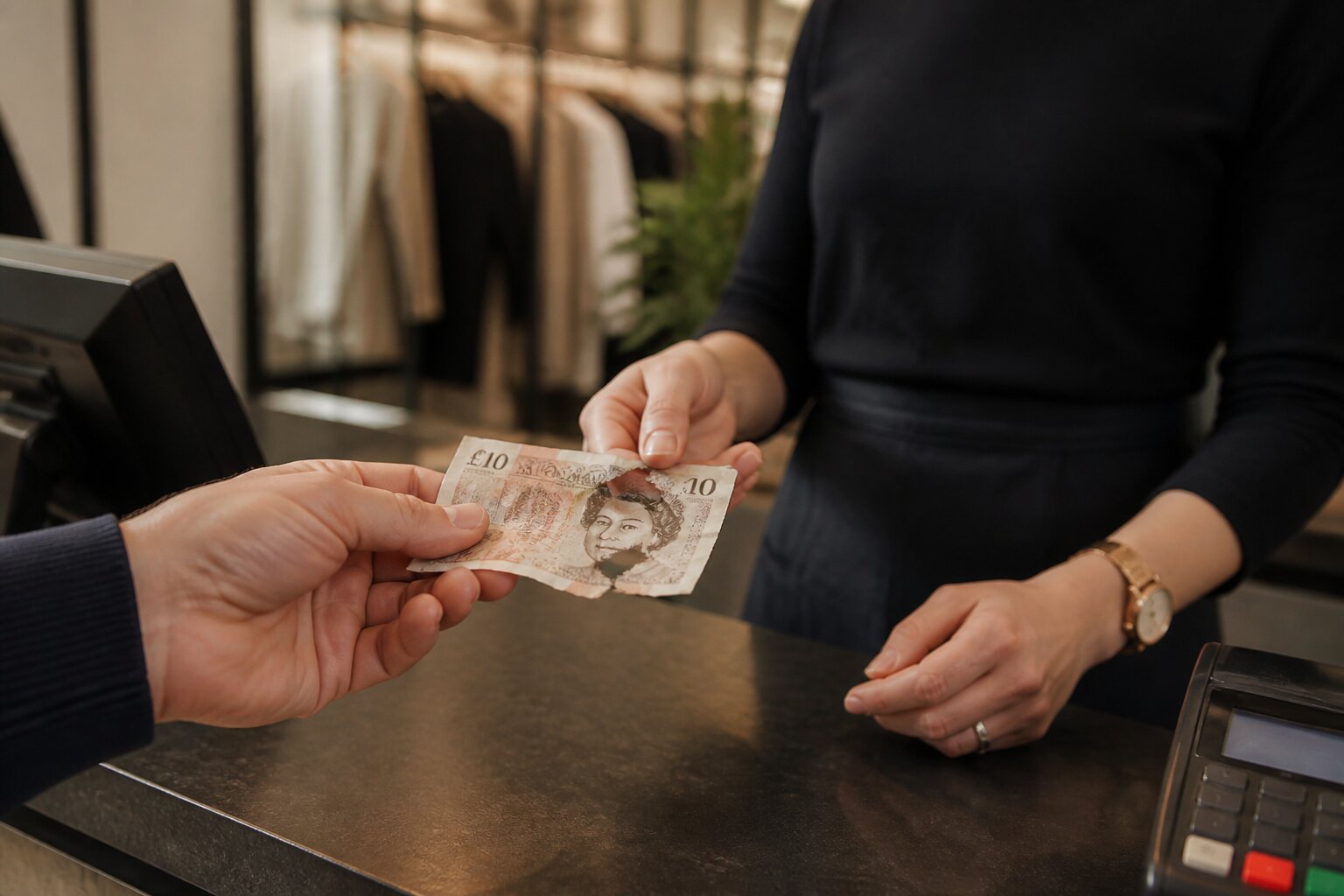
We’ve all been there—reaching into a wallet to find a crumpled, torn or tatty banknote. It’s an awkward moment if you’re about to pay, and you may wonder whether a shop will accept it or if you’ll need to swap it first.
This article explains what counts as damaged cash in the UK, how retailers typically handle such notes, and the practical ways to exchange them so you’re not left out of pocket. Read on to find clear guidance on what to do next with any battered banknotes in your possession.
What Counts as Damaged Cash?
Damaged cash covers any banknote that’s lost its original condition or is harder to identify as genuine because of physical harm. That can range from minor wear to severe destruction; the difference matters when you try to spend or exchange the note.
Common examples are torn or ripped notes (even when pieces are taped together), banknotes defaced with ink or drawings, notes with missing corners or sections, very faded or worn notes, and those partially burned or melted. Whether a note is acceptable often hinges on how much of it remains intact and whether security features like serial numbers and watermarks are still visible.
Understanding these categories helps when deciding whether to try spending a note or take it straight to a bank or Post Office for exchange. The next section looks at how shops tend to react when you present a damaged note at the till.
How Do UK Shops Handle Damaged Notes?
Retail responses vary. Larger chains and supermarkets usually follow strict cash-handling rules and may refuse notes that are heavily torn, missing sections or obscured by markings because tills and cash-counting equipment can’t process them reliably. Bookmakers and other businesses that handle lots of cash often use similar policies to reduce the risk of fraud.
Smaller independent shops sometimes show more flexibility for lightly damaged notes, but they will still refuse anything that prevents proper verification—such as missing serial numbers or illegible security features. Some self-checkouts and tills simply can’t accept creased or ripped notes even if staff would otherwise be prepared to take them.
When staff are deciding, the main considerations are the visibility of the serial number, how extensive the damage is, whether security features remain clear, and whether the till will accept the note. If those checks aren’t satisfied, the retailer is within reason to decline it. If it’s not accepted at the till, there are established options for exchanging the note, which we’ll cover next.
Can You Exchange Damaged Banknotes?
Yes—damaged banknotes can often be exchanged, and there are straightforward channels for doing so. High street banks commonly accept damaged notes from their account holders at branch counters, and many Post Office branches also handle exchanges. The exact process varies but usually involves an inspection of the note and verification that enough of it remains.
For minor damage you may receive a replacement immediately. If the note is more severely damaged or of high value, the branch may keep the note for further checks or ask you to complete a form and provide identification so the institution can process a claim securely. The Bank of England operates a formal service for seriously mutilated notes, which involves sending in the remains along with a completed claims form and ID.
Exchanges are subject to rules: typically at least half the note should remain for an automatic replacement, serial numbers should be legible, and obviously counterfeit or contaminated notes will not be accepted. Where immediate replacement isn’t possible, the institution handling the claim will explain the timescale and any further steps, which helps set expectations.
What Does the Bank of England Say About Damaged Cash?
The Bank of England provides the definitive guidance on banknote replacement. It will replace genuine banknotes that are torn, defaced or partially destroyed provided there is enough of the original to verify authenticity. Their Mutilated Notes Service requires submission of the remaining pieces, a completed claims form and identification for assessment.
The Bank assesses how much of the note remains and whether key security features are present. Generally, at least half the note should be intact for a full replacement. The Bank will not replace notes suspected of being counterfeit, nor those with missing or illegible serial numbers, and it will refuse notes contaminated by hazardous substances for safety reasons. Their official website sets out the forms and the postal procedure for submitting a claim.
Knowing how the Bank handles severe cases makes it easier to decide whether to visit your branch, the Post Office, or use the Bank’s service, depending on how badly the note is damaged.
Tips for Using and Replacing Damaged Notes
When possible, inspect notes before you spend them. If a tear or mark is minor and all features are visible, some shops may accept the note; politely presenting it and asking first avoids embarrassment at the till. For more pronounced damage—missing sections, heavy ink or burns—visit a bank or Post Office so staff can check and, where appropriate, exchange the note.
Store notes carefully in a wallet or purse to reduce the risk of damage from moisture, heat or folding. Avoid attempting to repair notes with tape or glue, as this can make formal verification harder and may complicate an exchange. For notes that are fragmented or contaminated, follow the Bank of England’s guidance and submit the remains via the official claims process.
The Bottom Line: Know Your Options for Damaged Notes
A slightly worn note might be accepted in some shops, but when a banknote is seriously torn, missing a large part, badly defaced or contaminated, the sensible route is to use formal exchange channels. High street banks, many Post Office branches and the Bank of England’s service exist to replace genuine but damaged notes, subject to checks on how much of the note remains and whether security features are legible.
Acting promptly when you notice damage and following the appropriate exchange procedures ensures you won’t lose the value of the note and reduces confusion for retailers. Using the official routes maintains the integrity of banknotes in circulation and gives you a reliable outcome when a note has seen better days.
**The information provided in this blog is intended for educational purposes and should not be construed as betting advice or a guarantee of success. Always gamble responsibly.