
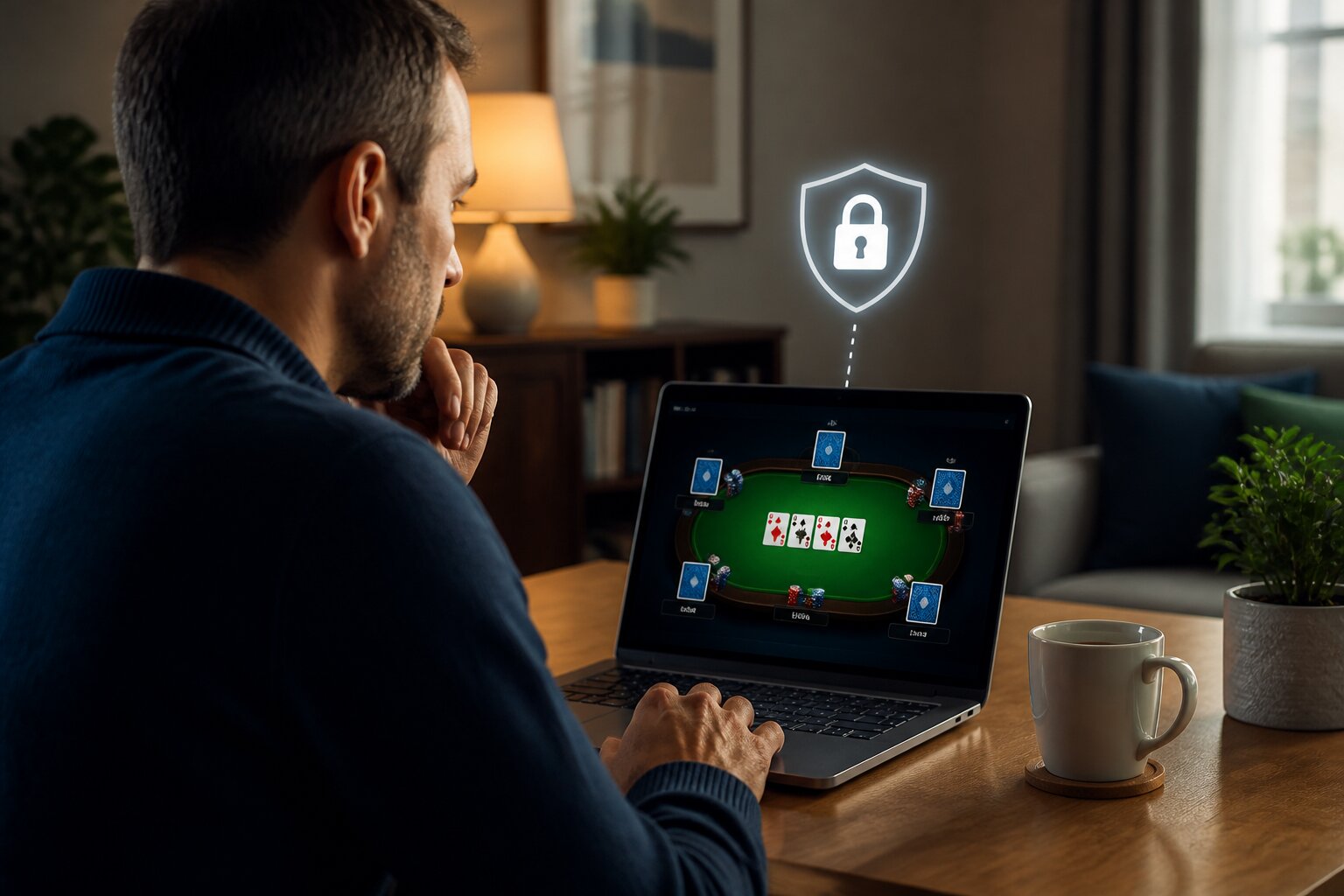
Ever sat at your computer playing a tense hand of online poker and wondered just how private your game actually is? When you’re bluffing on the turn or trying to read your opponents, the last thing you want on your mind is someone peeking over your digital shoulder. With more people choosing the convenience of browser-based or no-download poker, concerns about privacy and software tracking naturally increase.
Do poker operators have ways of monitoring your screen, or is that just a myth? Can a poker site really detect if you're using outside assistance or reading strategy notes while you play? The answers matter when real money and regulatory standards are involved.
Let’s untangle the reality from the rumours so you can play with a clear sense of what is and isn’t visible to an operator.
How Online Poker Sites Protect Player Privacy
Online poker sites operating in the UK must follow strict data protection standards set by the UK Gambling Commission, which helps ensure player privacy. Operators put security measures in place to protect personal information and gameplay, whether you use a downloaded client or play in a browser.
Sensitive data such as login credentials and payment information is encrypted before transmission so that it cannot be read if intercepted. Many operators add two-factor authentication to reduce the risk of unauthorised access to accounts. Behind the scenes, anti-fraud and anti-collusion tools watch for suspicious in-game patterns without reaching into your device or files.
Records relating to account management and transactions are stored securely and only shared when required by law. Regular audits and independent testing help ensure these protections remain effective. With that foundation in place, it helps to understand how the no-download option fits into the same security model.
No-Download Poker: What Does It Mean for Your Security?
No-download poker, also called instant play or browser-based poker, lets players join games directly from a web browser without installing software. It is a practical way to access real-money tables from many devices and still benefit from the same regulatory protections applied to downloadable clients.
Browser-based play relies on SSL certificates to encrypt data between your device and the operator’s servers so personal and financial details stay protected. Session timeouts log inactive users out automatically, which reduces the chance of someone else accessing an unattended account.
Although nothing is installed on your device during instant play, the platform does not have permission to view or control your screen, files, or other browser tabs. Browser sandboxing and operating system security prevent a web app from reaching beyond its own window. That containment means browser play avoids certain risks tied to storing software locally or running outdated applications on your machine.
With these security measures in mind, it is useful to consider the technical limits that prevent sites from seeing anything outside the poker environment.
Technical Limits: Can Poker Sites Access Your Screen?
Technical safeguards prevent poker platforms from accessing your desktop or other applications. Both browser-based and downloadable clients operate within controlled environments and do not have free access to your screen, files, or other programmes you may have open. They cannot read your documents, photos, or notes unless you explicitly give a separate app permission to do so.
The only information visible to an operator during a session is what happens inside the poker environment: your table actions, in-platform chat, and stored hand histories. Modern browsers and operating systems do not allow web applications or typical installed programmes to capture screens or monitor keystrokes beyond the app itself, unless you have deliberately granted special permissions to third-party software.
When screen compromise does occur, it is almost always because of malware that the user has installed inadvertently. Keeping anti-virus software up to date and installing apps only from reputable sources significantly reduces that risk. Next, we will look at common misconceptions about surveillance so you can separate fact from fiction.
Common Misconceptions About Poker Site Surveillance
One widespread myth is that poker sites can secretly use your webcam or microphone to watch or listen to you. Regulated operators do not access cameras or microphones without explicit permission from the user, and platforms are not designed to do so by default.
Another false idea is that operators can browse your computer, see which websites you visit, or spy on other browser tabs. In practice, application isolation prevents that kind of cross-access. Similarly, sites cannot view files or notes stored offline on your device.
Some players worry that operators can detect tools or scripts stored outside the poker client. In reality, surveillance focuses on in-game behaviour and statistical patterns rather than rummaging through a player’s desktop. Likewise, monitoring of chat is confined to messages sent through the poker software and does not extend to private messages or emails outside the platform.
These clarifications show the limits of what operators can do. To keep play fair, though, operators do analyse in-game activity closely, which brings us to the ways fair play is monitored.
Risks and Safety When Playing from Public or Shared Devices
Using public or shared devices raises particular privacy and security concerns. Shared computers may retain saved passwords or autofill information that makes it easier for the next user to access an account. If you forget to log out fully, funds and personal details could be at risk.
Public or unsecured Wi-Fi networks are another weak point because they can be targeted for interception of login information. Even if the computer itself appears secure, the network may not be.
When possible, avoid playing on shared devices altogether. If you must, do not allow the browser to save passwords or payment details, log out completely after each session, and clear browsing history where feasible. Private browsing modes help limit local data retention. Keep any public device’s security software up to date and do not download files or apps from unverified sources.
Being cautious about where you play protects not only your account but also the integrity of your gameplay. That leads into how operators detect cheating and maintain fair tables.
How Do Poker Sites Monitor Fair Play and Cheating?
Operators use a combination of automated systems and human review to identify cheating and collusion. Software flags unusual patterns such as highly correlated betting between specific accounts, repetitive chip transfers, or play that matches characteristics of banned assistance tools.
When the software detects anomalies, specialist teams may examine hand histories and sequences of play to determine whether rules were broken. These reviews focus on in-game data and statistical analysis rather than any activity outside the poker environment. Trained staff assess whether flagged behaviour indicates collusion, the use of unauthorised software, or other breaches of platform rules.
This approach helps maintain a level playing field while respecting player privacy. To clarify what data supports these checks, the next subsection outlines the types of information operators can legally collect.
What Data Can Poker Sites Legally Collect?
Operators may collect data necessary for service management and game integrity. Typical items include:
- Account details submitted during registration, such as name, age, and contact information
- Financial transactions and withdrawal records
- Game history, including bets, folds, calls, raises, and hand histories
- Device information such as IP address and operating system for security and anti-fraud purposes
Collection is limited to what is relevant for providing the service and complying with regulatory obligations. Personal files, emails, and unrelated information are not within scope.
Are Players' Actions Tracked During Hands?
Yes. Operators record every move made at the table to preserve game integrity. This includes betting patterns, the timing of decisions, actions such as checks, folds, calls, raises, chat messages within the platform, and the outcome of each hand.
Tracking is confined to the poker application itself and serves to detect collusion, unauthorised assistance, or other breaches of fair play. No monitoring extends into activity that takes place outside the client or browser window.
Your Rights and Safe Practices for Online Poker
Players on UK-licensed poker sites have rights under data protection law and regulator standards. You can request access to personal data held about you, ask for inaccuracies to be corrected, and in some situations request deletion. You can also control marketing preferences.
For account security, use a strong, unique password and enable two-factor authentication where available. Log out after every session, especially on shared devices, and review account activity regularly. Be cautious with unsolicited emails and links that appear to come from the site but might be phishing attempts, and report any suspected unauthorised access to support promptly.
Support teams are available to help with privacy requests and account issues. If you need limits or time out tools, these are provided to help manage play responsibly and protect your account.
We aim to keep your experience secure and fair so you can focus on the game itself.
Explore Casino Games at Pay By Mobile Slots
We welcome you to be part of our lively community and experience the enjoyment our casino games bring. Sharing the fun with fellow players is all part of what makes Pay By Mobile Slots special.
Getting involved is simple: all it takes is making your first deposit and you are ready to experience the excitement with us. We look forward to seeing you play and enjoy all we have to offer.
**The information provided in this blog is intended for educational purposes and should not be construed as betting advice or a guarantee of success. Always gamble responsibly.