
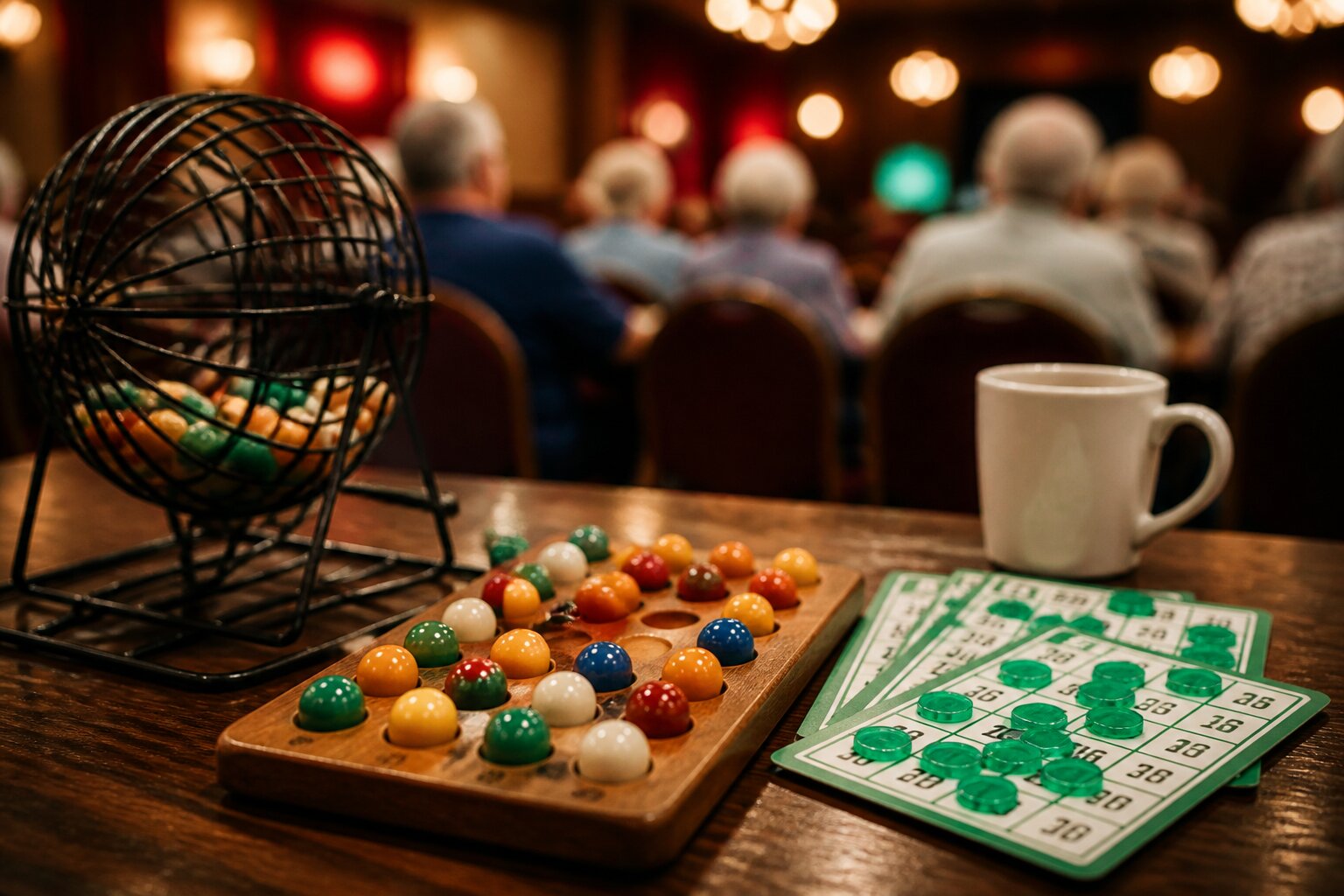
Fancy a bit of craic with your bingo? Whether you’re new to the game or want to brush up on the calls, this guide will get you comfortable with how Irish bingo looks and sounds. You’ll learn how cards work, what the caller might say, and the main game formats so you can join in confidently.
Irish bingo is social and playful by nature, with lively banter and distinctive number calls that give each game its own flavour. Read on to find out how the pieces fit together and what to expect when you take a seat at a game.
What Is Irish Bingo And How Does It Work?
Irish bingo is played in clubs, community halls and online, sharing the basic mechanics of bingo while leaning into a more chatty, entertaining atmosphere. A typical ticket contains 15 numbers arranged in three rows of five. Numbers are announced one at a time and players mark them off on their cards.
Games usually award prizes for completing a single line, two lines, and a full house, in that order. The caller’s personality and the hall’s customs shape the feeling of a session; some games are fast and energetic, others more relaxed and conversational. That social element is part of what draws many people to Irish bingo—even when playing online, chat features recreate the banter you’d hear in a hall.
It is also worth noting practical rules: players must be 18 or over, and venues or platforms will outline ticket costs and prize details before play begins. Keeping within a personal spending limit helps the experience stay enjoyable.
How Do I Buy Tickets And Read An Irish Bingo Card?
Joining a game starts with buying a ticket, sometimes called a card. Tickets are available at the venue shortly before a session starts or through legitimate online bingo services. Prices vary between events, so check the cost and the prize structure beforehand.
A standard Irish bingo ticket shows 15 random numbers in three horizontal rows. As the caller announces numbers, mark those that match the ones on your card. The first person to complete a line, two lines, or the full house will call out to make their claim, which is then verified by the host.
Remember that having a ticket simply allows you to participate; it does not guarantee any particular outcome. Decide how much you are comfortable spending before you begin and stick to that limit.
How Are Numbers Called In Irish Bingo?
Numbers are drawn at random and announced aloud so everyone can hear. What sets Irish bingo apart is the way callers often add rhymes, nicknames or short phrases to a number. These calls are traditional, local or humorous turns of phrase that make the event feel more like a social gathering than a purely mechanical game.
Callers aim to be clear and audible, and in larger halls or online sessions the pace can quicken. Paying attention and following the rhythm of numbered calls helps you keep up during busier games. The voice of the caller and the crowd’s reactions are as much part of the experience as the numbers themselves.
Common Irish Bingo Calls And Caller Phrases
You’ll hear many colourful calls in Irish bingo. Below are some well known examples, each paired with a brief note so you know what to expect when it is announced.
- Kelly’s Eye (1) — A traditional opening for the number one.
- Two Little Ducks (22) — A playful image for the two twos.
- Legs Eleven (11) — Often greeted with a whistle or chuckle.
- Seven (7) — Frequently called with a short rhyme or emphasis.
- Nine (9) — A short, crisp call that fits neatly into a sequence.
Halls will add local favourites or invented rhymes, such as “dirty knees, thirty-three” or “knock at the door, number four.” These lines are part of the atmosphere and do not affect how the game is played; they simply add extra entertainment value.
How Do Winning Patterns And Prizes Work?
Winning in Irish bingo depends on matching the pattern announced for that game. Common patterns are:
- Single line: all five numbers in a single row.
- Two lines: any two full rows.
- Full house: every number on the ticket.
When a player believes they have completed a winning pattern they announce it, and the host verifies the claim against the numbers called. Prizes, which are usually declared before play, vary by venue and may range from modest cash awards to non-cash items. The host’s verification step prevents errors and keeps the game fair for everyone.
It helps to arrive early or check the event details online to confirm prize amounts and any house rules. That way there are no surprises, and you know exactly what is at stake for each stage of the game.
What Are The Main Game Variants And Formats?
Irish bingo can be played in several formats, each offering a slightly different experience. Which format you choose depends on personal preference and what’s available at the venue or online.
90-Ball Bingo
This is the format most commonly associated with Irish bingo. Tickets contain 15 numbers across three rows, and the standard prize progression is one line, two lines, then full house. The rhythm of the game tends to suit larger groups and traditional halls.
75-Ball Bingo
Used less often but seen in some venues and online, 75-ball bingo employs a 5 by 5 grid with a free centre space. Winning patterns are more varied and can include shapes, straight lines, or a full house. The game plays differently from 90-ball and can feel quicker or more pattern-focused.
Online Bingo
Online platforms host both 90-ball and 75-ball games and often include chat features so players can enjoy the same banter found in halls. Some online games add automated ticket-checking and notifications, which simplifies following multiple cards. Before joining an online session, review the rules and prize structure so you know how a particular room runs its games.
If you are unsure which format suits you, try a few styles and see which pace and pattern systems you prefer. Each one offers its own balance of social interaction and game mechanics.
This guide has taken you through how Irish bingo is played, the way callers put a local spin on numbers, and the main formats you will encounter. With that background, hopefully you should feel ready to listen for the calls and enjoy the atmosphere—just be sure to check the event details and play within the limits you set for yourself.
**The information provided in this blog is intended for educational purposes and should not be construed as betting advice or a guarantee of success. Always gamble responsibly.