
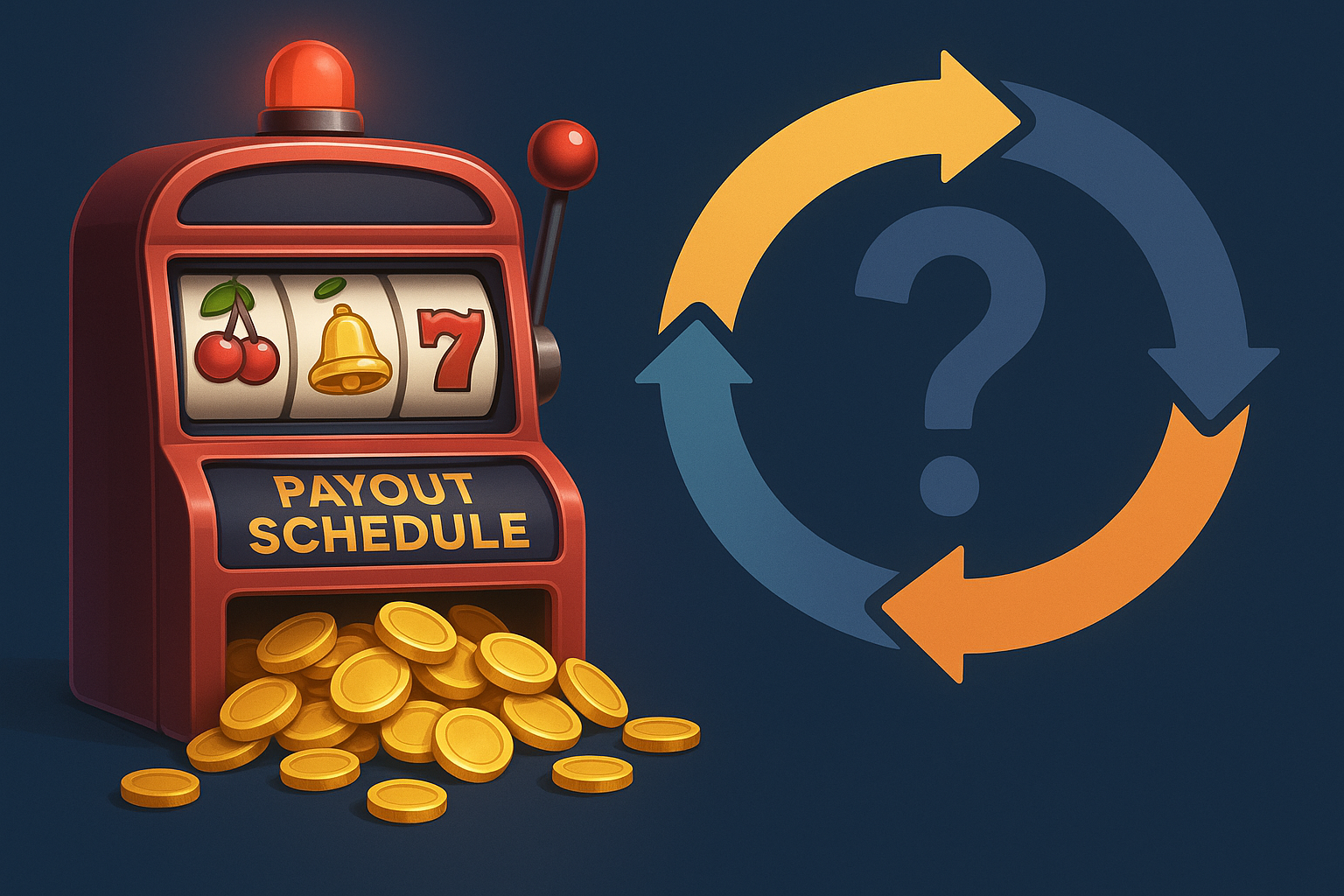
Have you ever wondered how slot machines decide when to pay out, or if there is a secret cycle behind wins and losses? You are not alone, many players want to know how these games really work.
As a licensed UK operator, we focus on clear facts about payout schedules and how outcomes are created. Slots never guarantee a win because results are produced by random processes.
If you want to know what actually influences payouts and whether hot or cold streaks exist, keep reading, this guide separates the myths from the mechanics.
What Is a Slot Machine Payout Schedule?
A slot machine payout schedule tells you how much you can win for different combinations of symbols on the reels. You might also hear this called a paytable. It appears in every slot, whether you are playing online or in a venue. It helps you compare symbol values before you place a stake.
The schedule lists all the winning combinations and shows what each one pays. It often explains how many symbols you need and whether wins apply on specific paylines or across ways to win. In many games line wins count from left to right unless the paytable states otherwise. Wilds can substitute for other symbols, and scatters may pay without using lines.
For example, three cherries might pay a smaller amount, while five sevens could lead to a much larger prize. Some paytables display payouts as multiples of your total bet or bet per line, while others show currency amounts. Changing your stake usually updates the figures shown.
Most UK slots show the paytable clearly within the game. Look for Paytable, Info or a small i icon. You will see symbol values, paylines or ways to win, and feature details. The payout schedule is set by the game’s design and does not change, and results are random on every spin. RTP and volatility describe long term performance and do not guarantee outcomes. Check any maximum win cap and play within your budget.
How Do Slots Determine When to Pay Out?
Slots use a Random Number Generator, or RNG, to decide the outcome of every spin. This computer programme runs continuously and creates a new, unpredictable result at the moment you press spin. The reels and animations then simply reveal the result determined at that moment.
In the UK, slot games must meet strict standards set by the UK Gambling Commission. Each spin is independent, which means what happened before has no effect on what happens next. There is no pattern you can follow or trigger you can time. Independent labs test and certify the RNG and game maths under these rules.
Because of this design, every player gets the same fair shot on every spin.
Do Slot Machines Operate in Cycles?
It is a common belief that slots run in cycles where losses are followed by wins, or that a machine is due to pay. That is not how modern slots work.
There is no memory in the system and no built in sequence for payouts. Each spin is decided on its own by the RNG, so the odds are the same every time you play. Licensed games are independently tested, and the advertised RTP is a long term average, not a timetable of payouts.
You cannot spot signals or patterns to predict a result. Random outcomes can cluster into short winning or losing streaks, but that does not show a cycle. A machine is never due. Play with that in mind, and avoid chasing a pattern that does not exist.
Common Myths About Slot Machine Payouts
You will hear plenty of stories about how to time a spin or pick a machine. Myths tend to spread because results can vary a lot from session to session, but that variation does not reveal a hidden system.
There are no tricks in the background that change what a game pays once it has been approved for use. The rules and payout information are set out within the game and stay consistent.
Are Slot Machines Really Due for a Win?
A popular myth says a slot that has not paid for a while is due a win. It sounds reasonable, but it does not match how RNGs work.
Because every spin is random and independent, previous results do not build towards a payout. A game can go a long stretch without a big prize or hit two jackpots close together. Both are possible because each outcome stands alone.
Treat slots as entertainment, set limits that suit you, and do not chase losses.
How Do UK Payout Schedules Differ From Other Regions?
In the UK, payout schedules must be clear and accurate. The UK Gambling Commission requires transparent information about how games pay and how their outcomes are generated. Operators need to present key details in a straightforward way within the game or its help pages, including rules, paytables, maximum win limits and any jackpot terms that could affect how returns are calculated.
UK rules also expect the return to player figure you see to reflect the actual version you are playing. If a game can run at different RTP settings, the configured value should be shown so you know what applies on that site. RTP is a long-term theoretical average, not a prediction for any session, and it should be explained in those terms.
Elsewhere, rules can vary. In some regions, disclosure of return to player rates may be less clear, or independent checks might not be as rigorous. The same title can sometimes appear with different RTPs without obvious notice, and testing standards or frequency may differ. That can make it harder to compare games or understand how they are designed to pay over time.
UK slots must display RTP and use approved testing to verify their systems. Games go through certification before launch and again after any material change, with audits covering the random number generator and payout tables. Where a jackpot is involved, information should state how it is funded and whether the published RTP includes the jackpot contribution.
These checks help you see the long-term expectations and trust that the game runs as intended. Outcomes are independent on each spin, so your experience will naturally vary from the theoretical average.
Understanding Random Number Generators in Slots
Random Number Generators are the engine behind every slot result. The programme runs continuously in the background, producing a rapid stream of numbers. When you press spin, the current number is mapped to the symbols you see on the reels. Most online slots use computer-based RNGs that rely on seed values and complex algorithms to keep that flow of numbers unpredictable.
That mapping happens instantly. Neither you nor the operator can predict or influence which number the RNG will be on at the exact moment you spin. Timing it is not possible because the sequence moves thousands of times per second. Stopping the reels early, switching stakes or using autoplay does not change the outcome, as the result is set the moment you press spin.
In the UK, RNGs are checked by approved independent labs to confirm they produce unpredictable outcomes within the game’s design. These checks support fairness and ensure the results you see match the published rules and paytable. Only games that meet these standards can be offered to players in Britain, and software updates are also subject to review.
Each spin is independent. There are no patterns to track, and a near miss or a long run without a win does not mean a result is due. The published Return to Player is a long-term theoretical percentage based on many spins, not a guarantee of what you will see in a single session.
What Should Players Know About Return to Player (RTP)?
Return to Player, or RTP, is the percentage a slot is designed to pay back to players over a long period. For example, a slot with 96% RTP is expected, in theory, to return £96 for every £100 staked across many thousands of spins. RTP is a theoretical long term average based on extensive testing.
RTP is an average. It does not tell you what will happen in a single session. Your results can be higher or lower because outcomes are random. Each spin is independent, so previous outcomes do not affect the next one.
RTP is useful as a guide, but it sits alongside other parts of the game such as volatility, features, and how the bonus round works. Check a game’s RTP before you start so you know the long term expectation. Some games have different RTP settings; check the info or paytable to see the version in use.
Can You Predict When a Slot Machine Will Pay Out?
No. There is no way to forecast a win, and no system that can make a slot pay. Because each spin is independent and chosen by the RNG, past results, timing tricks, and betting patterns do not reveal what comes next. Licensed online and land-based games use tested random number generators that ensure each spin is produced at random.
Be cautious of any claim that promises guaranteed wins or insider timing. If a strategy sounds certain, it is not reflecting how regulated slots operate.
Summary: Key Takeaways on Slot Machine Payout Schedules
A payout schedule, or paytable, shows what each symbol combination pays, and those prizes do not change. Outcomes are decided by an RNG, which makes every spin independent and unpredictable.
In the UK, slots follow UK Gambling Commission rules. Games display RTP and use tested systems so you can see the long term expectation and trust the process behind each result.
RTP is a helpful indicator rather than a promise for your session. Use the information available, set limits that work for you, and enjoy slots as a form of entertainment. As a licensed UK operator, we are committed to a safe, fair place to play.
**The information provided in this blog is intended for educational purposes and should not be construed as betting advice or a guarantee of success. Always gamble responsibly.