
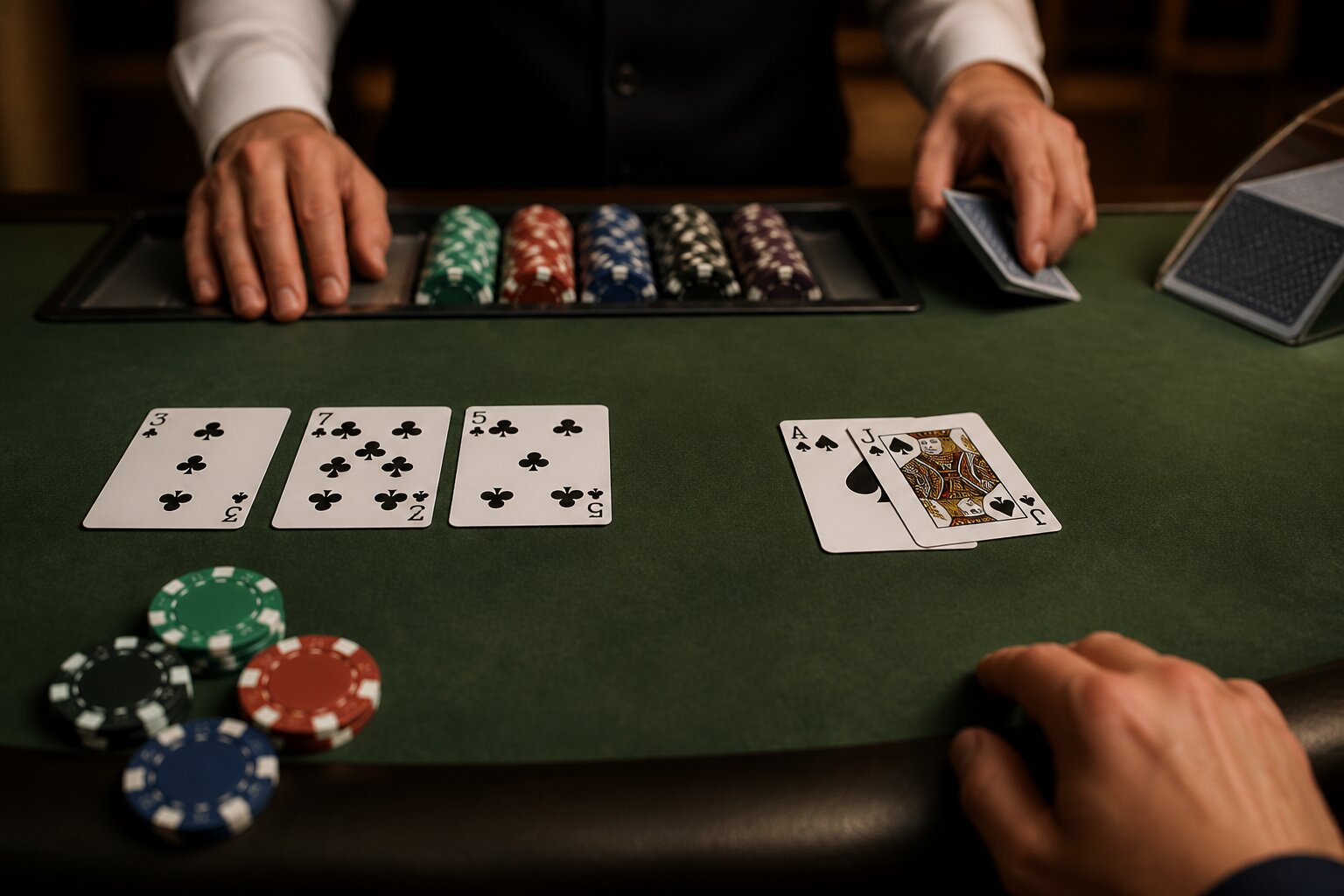
Curious about adding a little extra to your blackjack play? The 21+3 side bet layers a poker-style payoff onto the opening cards, creating opportunities for much bigger single-round wins than the main game.
This article explains how the 21+3 side bet works, what a suited trips hand is, how payouts are typically structured, and how to judge whether the bet fits your style. Read on and you’ll have a clear sense of what to expect at the table.
What Is the 21+3 Side Bet in Blackjack?
The 21+3 side bet is an optional wager placed alongside your standard blackjack stake. It uses the two cards you receive and the dealer’s face-up card to form a three-card poker hand. The result of that small poker hand — not whether you get closer to 21 — determines whether the side bet pays.
Common qualifying combinations include flushes, straights, three of a kind and the top outcome, suited trips. Because the side bet focuses only on those three cards, it runs independently of how the main hand plays out.
If you’re new to side bets, think of 21+3 as a compact poker contest embedded inside your blackjack round. It offers higher single-round payouts in exchange for a larger house edge compared with regular blackjack play.
How Do Suited Trips Work in 21+3?
Suited trips occurs when your two cards and the dealer’s upcard share both the same rank and the same suit. In other words, all three cards must be identical in value and suit — for example, three Queens of hearts would qualify.
Because most casinos use multiple decks in the shoe, seeing three cards with the same rank and suit is possible. In a single-deck game it would be impossible to have three identical cards, so suited trips would never occur.
This is stricter than three of a kind, which only requires matching rank regardless of suit. Suited trips therefore happens far less often and is usually one of the rarest, highest-paying outcomes on the 21+3 paytable.
Knowing this exact definition helps you spot the hand quickly at the table and avoid confusion with similar three-card combinations such as three of a kind, a straight, or a flush.
Payouts for Suited Trips and Other 21+3 Outcomes
Payouts for the 21+3 side bet vary by game but typically follow a descending scale according to how rare each hand is. Below is a representative example; always check the specific paytable where you play.
The following explains the common tiers and what they mean:
There are a few standard payout structures you’re likely to encounter, for instance:
- Suited Trips: 100 to 1
- Straight Flush: 40 to 1
- Three of a Kind: 30 to 1
- Straight: 10 to 1
- Flush: 5 to 1
These figures refer only to the side bet stake and are paid when the three-card combination appears. Higher payouts reflect lower frequency; the odds of each outcome are fixed by the rules of the game rather than influenced by earlier rounds.
How to Identify a Suited Trips Win?
Spotting suited trips is straightforward once you know what to check for. After the initial deal, look at the two cards you were dealt and the dealer’s upcard. First, ask whether all three share the same rank — for example, three Jacks. Next, confirm they are all the same suit, such as all clubs.
If both conditions are satisfied, the hand is suited trips and the side bet pays according to the table. Because these hands are uncommon, many rounds will pass without one appearing, which is why payouts are high when they do occur.
A clear view of the definitions and payout table will make it quick to identify wins and avoid mix-ups with other three-card combinations.
Is the 21+3 Side Bet Worth It?
Whether the 21+3 side bet suits you depends on your priorities. It offers moments of large payout but typically carries a higher house edge than the main blackjack game, so it is not a long-term replacement for standard play.
Players who value occasional big returns and enjoy occasional large swings may find the bet appealing. Others who prefer steady, lower-variance play are likely to avoid it. Consider how often you want to accept volatile outcomes and whether a shorter-term, higher-payout experience fits your budget.
Before placing side bets, examine the paytable and set a staking approach that matches your comfort level. This helps you enjoy the added excitement without losing track of how much you’re committing per round.
This background makes it easier to decide whether to add 21+3 to your usual blackjack routine.
Common Myths About the 21+3 Side Bet
A few persistent myths surround 21+3, so it helps to address them directly. One is the idea that patterns in previous hands predict future outcomes; because each deal is independent, earlier results don’t influence what comes next.
Another misconception is that betting systems can overcome the house edge on the side bet. Betting strategies can change the short-term experience but cannot alter the underlying probabilities coded into the paytable.
Finally, some players assume the side bet carries the same odds as blackjack itself. In reality, the mechanics and probabilities differ, so expect the side bet to behave independently from the main game’s expected returns.
Clearing up these myths makes it easier to approach the side bet with realistic expectations.
Where Can You Play Blackjack With 21+3 in the UK?
Many regulated venues and online platforms offer blackjack variants that include the 21+3 option. Look for the side-bet option in the game description or table rules before you start playing.
Online sites often label the side bet in the game’s settings or paytable, and live dealer tables will usually display side-bet availability on the table layout. In physical casinos, check the table signage or ask staff whether the particular table includes 21+3.
Always play with operators that are licensed and regulated; they provide protections such as verified paytables, account security measures and tools to manage spending. If you decide to try 21+3, use only funds you’re prepared to spend on higher-variance bets and make use of any available account controls.
This guidance should help you find and use the 21+3 side bet confidently.
**The information provided in this blog is intended for educational purposes and should not be construed as betting advice or a guarantee of success. Always gamble responsibly.